

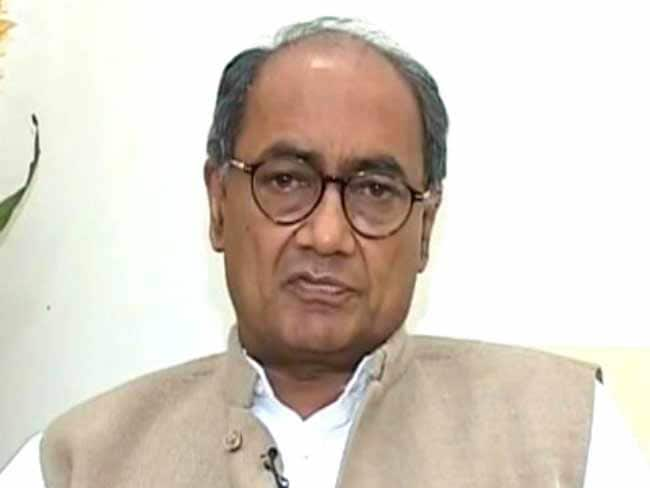
New Delhi: The debate surrounding the Central Board of Secondary Education’s (CBSE) newly introduced three language policy has intensified, with Parliamentary Standing Committee Chairman and senior Congress leader Digvijaya Singh writing to Prime Minister Narendra Modi and urging the Centre to suspend its implementation for Class IX students. Singh argued that the policy’s mid session rollout could create widespread disruption for schools, teachers and students across the country.

In his letter to the Prime Minister, Singh expressed concern over CBSE’s decision to make the study of three languages compulsory for Class IX students from July 1, 2026. Under the revised framework, students are required to study three languages, with at least two being Indian languages. The policy was introduced in line with the National Education Policy (NEP) 2020 and the National Curriculum Framework.
The Congress leader questioned the timing of the decision, stating that schools had already completed their academic planning for the current session. He warned that the sudden implementation could affect thousands of schools and millions of students who have already selected subjects and language combinations based on existing academic schedules.
Singh also raised concerns over the availability of qualified language teachers and textbooks required for the new system. According to him, many schools may struggle to arrange adequate teaching resources within a short period, potentially affecting the quality of education and creating confusion among students and parents.
Another key issue highlighted in the letter relates to students from southern and north eastern states, where Hindi is not widely spoken and several regional or tribal languages may not be included in the CBSE language framework. Singh argued that these regions could face additional challenges if the policy is implemented without sufficient preparation and consultation.
The controversy comes amid an ongoing legal challenge to the policy. The Supreme Court has already issued notices to the Centre, CBSE and NCERT on a petition challenging the mid session implementation of the three language mandate. Petitioners have sought restoration of an earlier CBSE position that had reportedly deferred compulsory implementation until a later academic cycle.
Education experts remain divided on the issue. While supporters argue that the policy promotes multilingual learning and aligns with the objectives of the NEP, critics believe that the transition requires better planning, infrastructure and stakeholder consultation before enforcement.
For now, the future of the policy remains uncertain as political opposition grows, legal scrutiny continues and schools await further clarity from the Centre and CBSE. The government’s response to the Parliamentary Committee chairman’s appeal is expected to be closely watched by educators, parents and students across the country.
Comments are closed.