

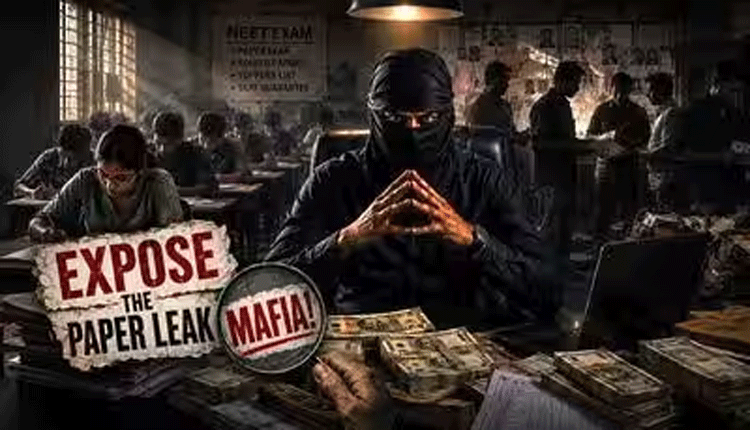
New Delhi: The shadow of the education mafia has haunted competitive examinations in India for over two decades. From the infamous Ranjit Don syndicate in 2003 to the highly organised Doctor Gang of 2026, paper leak cartels have continuously compromised the future of millions of students while evading final judicial convictions.

The genesis of this organised crime dates back to the 2003 Common Admission Test paper leak. Kumar Suman Singh, widely known as Ranjit Don from Nalanda in Bihar, pioneered the syndicate model. His network spanned Maharashtra, Delhi and Bihar. The 2003 test paper was stolen straight from a Mumbai printing press with the help of a daily wage worker. In exchange for hefty bribes, the stolen papers reached a hotel in Delhi where candidates paid exorbitant amounts to memorise answers overnight. Despite massive public outrage and Central Bureau of Investigation probes, cases in Delhi and Patna remain stuck in trial courts even after twenty years.
Fast forward to the 2026 National Eligibility cum Entrance Test for Undergraduates, the rot has only deepened with white collar professionals joining the illegal trade. The Latur based Doctor Gang involved medical practitioners, coaching institute owners and government translators. Investigations revealed that Doctor Manoj Bhagwanrao Shirure turned his hospital into a hub for leaking papers. With the help of an official translator, the syndicate procured the question papers and sold them as digital files on Telegram for ten lakh rupees each. Law enforcement agencies arrested thirteen individuals across multiple states. Recently, a Delhi court rejected the bail pleas of the prime accused, noting that their actions caused severe reputational damage and financial losses running into hundreds of crores.
Similarly, the 2024 medical entrance exam leak brought the Sanjeev Mukhiya gang of Bihar into the spotlight. This syndicate specialised in bypassing physical security measures, seamlessly opening sealed iron trunks transporting question papers without leaving any trace of tampering.
The recurring nature of these scandals highlights a systemic vulnerability in the examination infrastructure. While authorities manage to bust individual rackets and make arrests, the deeply entrenched network of the education mafia continues to find new loopholes. Securing the sanctity of national level examinations remains a critical challenge for the government, demanding stricter laws and faster judicial outcomes to restore student faith in the system.
Comments are closed.