

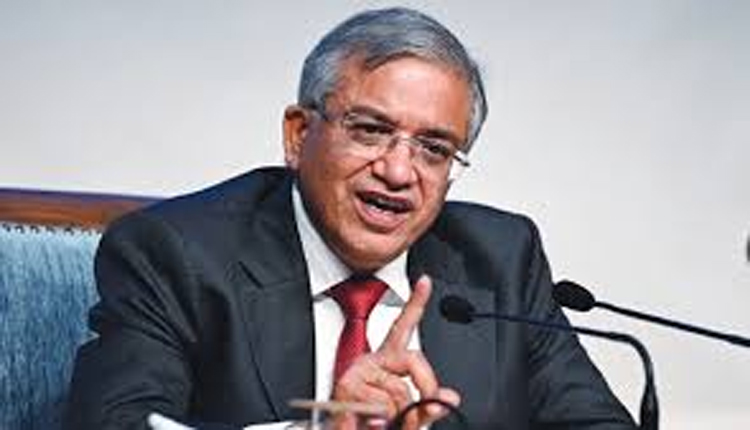
New Delhi: The Supreme Court has sought a detailed explanation from the Election Commission of India (ECI) regarding recent modifications made to Form 6, a crucial statutory document used for the registration of new voters. The controversy intensified after Chief Justice of India (CJI) Surya Kant categorically denied claims that the apex court had approved the changes, directing the poll panel to clarify under whose authority the amendments were introduced.

“Modified Form 6 has not been approved by us, let us be very clear,” CJI Surya Kant remarked during a recent hearing. He further stated that once the official records are produced, the court would want to ascertain exactly who authorised the changes to the form and the administrative procedure that was followed.
The issue revolves around the ECI’s decision on September 30, 2026, to modify Form 6 in states where the Special Intensive Revision (SIR) of electoral rolls had been completed. The poll panel removed the requirement for applicants to provide details of their or their ancestors’ inclusion in the 2003 voter list if their names were previously deleted during the SIR. Consequently, an additional declaration, known as Annexure-IV, was also scrapped from the form.
While the general eligibility checks for voter registration were meant to continue uninterrupted, the procedural alteration has sparked a massive row, especially in light of alleged internal disagreements within the Election Commission.
According to reports, Election Commissioners Vivek Joshi and Sukhbir Singh Sandhu had strongly objected to the modifications made to the statutory form. The unfolding events have led to allegations that Chief Election Commissioner Gyanesh Kumar may have taken the decision unilaterally, bypassing the necessary consensus within the three-member panel.
The Supreme Court has taken a stern view of these developments. The bench indicated that if the ECI’s records confirm that the decisions regarding Form 6 were indeed taken without unanimous agreement among the Election Commissioners, the court would not hesitate to reverse those directives.
The Election Commission is now required to place all relevant records, files, and minutes of the meetings before the Supreme Court to explain the rationale and the exact decision-making process that led to the controversial changes in the voter registration form.