

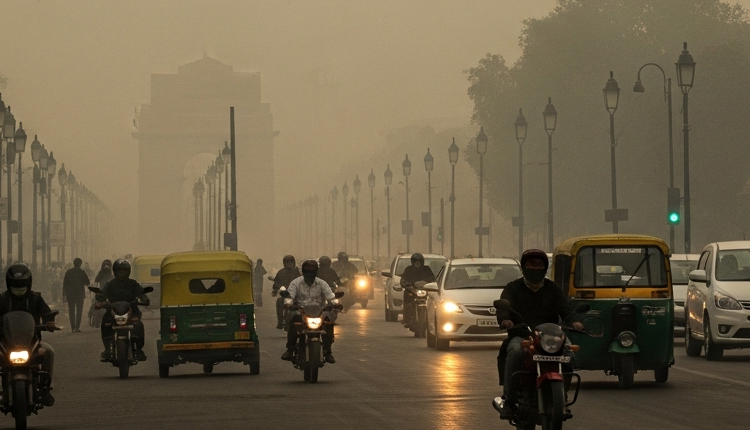
New Delhi: As worsening air quality continues to grip Delhi-NCR and several other parts of the country, residents are increasingly stepping outdoors in masks to shield themselves from toxic air. With hazardous air taking a toll on the lungs and other organs, many households are now questioning whether staying indoors offers adequate protection—or if wearing a mask inside the home has also become necessary.

Health experts point out that simply staying behind closed doors does not guarantee clean air. Polluted outdoor air often seeps into homes through doors and windows. At the same time, everyday domestic activities—such as cooking fumes and burning agarbatti, dhoop, or mosquito coils—can further degrade indoor air quality.
According to Dr Ankit Bhatia, Senior Consultant at the Yashoda Institute of Respiratory Medicine and Interventional Pulmonology, continuous masking inside the house is not required for everyone. He explained that the need depends largely on the quality of indoor air and an individual’s underlying health. However, he cautioned that extra care is essential in homes where outdoor pollution enters easily and adequate air purification arrangements are lacking.
Vulnerable groups face a higher risk during severe pollution spells. Dr Bhatia advised that people suffering from asthma, Chronic Obstructive Pulmonary Disease (COPD), and other respiratory ailments, along with senior citizens, children, and pregnant women, must take added precautions. In spaces where indoor pollution levels remain high—or whenever stepping outside cannot be avoided—wearing a well-fitted N95 mask can help reduce exposure.
Rather than relying on masks indoors, specialists stress tackling pollution sources and improving air quality inside the house. Dr Bhatia recommended using an air purifier equipped with a HEPA filter, keeping doors and windows shut when outdoor pollution spikes, and avoiding smoking, incense sticks, and mosquito coils indoors. Regular cleaning with a damp cloth is also advised to keep dust from settling and recirculating.
Doctors further warn against dismissing early warning signs. If anyone experiences a persistent cough, shortness of breath, chest tightness, or eye irritation even while staying indoors, they should not treat it as a minor discomfort and must consult a doctor promptly.