

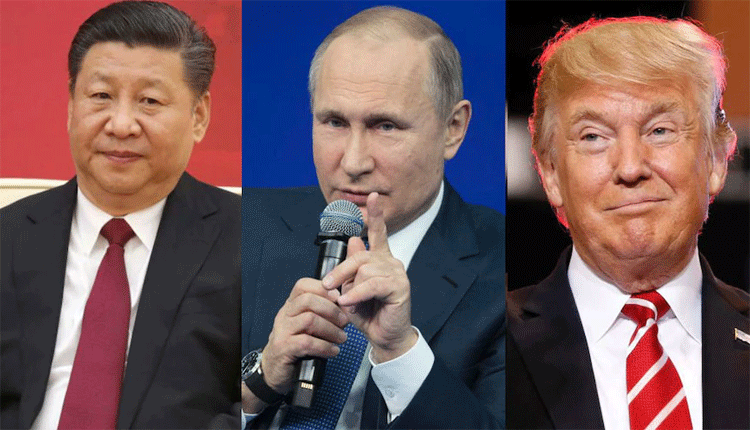
Shenzhen: Chinese President Xi Jinping, Russian President Vladimir Putin, and US President Donald Trump are set to meet on Thursday on the sidelines of the Asia-Pacific Economic Cooperation (APEC) summit in Shenzhen, in a rare trilateral engagement that could reshape the global balance of power.

The high-profile gathering has drawn comparisons to the 1945 Yalta Conference, where US President Franklin D. Roosevelt, British Prime Minister Winston Churchill, and Soviet leader Joseph Stalin discussed carving the post-Second World War world into spheres of influence. The Shenzhen talks follow a rapid sequence of leader-level engagements: Xi hosted Trump and Putin in Beijing in May, Trump hosted Xi in Washington in September, and Trump met Putin in Alaska last year.
Observers note that these meetings signal a broader shift away from the post-Cold War reliance on multilateral institutions and formal alliances towards direct, personalised diplomacy among major powers. Although Beijing, Moscow, and Washington remain strategic rivals with no formal alliance, all three appear increasingly aligned in favouring a world order where great powers take the lead on war, security, and economic stability—potentially sidelining Europe and middle powers such as India and Japan.
The clearest impact of this shift is visible in Europe. Earlier this year, the US and Russia concluded a third round of peace talks in Abu Dhabi aimed at ending the Ukraine war. While Ukraine took part, European negotiators were left out. During last week’s discussions in Abu Dhabi, the Russian delegation signalled its desire for a Cold War-style security arrangement based on spheres of influence in Europe. Trump also suggested that Washington is working on a broader settlement to end the conflict involving “all of Europe.”
Following the talks, US special envoy Jared Kushner stated that Washington wants Europe included in the process. However, he remarked that finding a credible representative to negotiate on Europe’s behalf could prove more difficult than persuading Russia to let Europe join—comments that have deepened concerns over European divisions and shrinking global clout.
Xi’s decision to join the trilateral meeting in Shenzhen also places Beijing in a delicate position. Having long championed a multipolar world order, criticised Cold War-style great-power dominance, and previously backed European participation in Ukraine talks, China risks appearing to endorse Europe’s exclusion by meeting Trump and Putin alone, even if Ukraine is not formally on the agenda.