

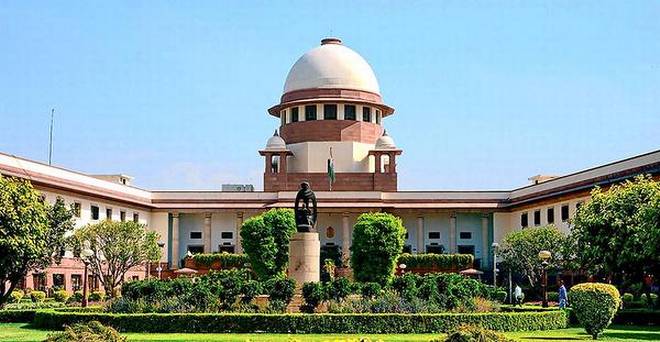
New Delhi: The Supreme Court has issued a notice to the Central government and the Supreme Court Secretary General on a petition seeking the long-pending finalisation of the Memorandum of Procedure (MoP), which governs the appointment of judges to the Supreme Court and High Courts.

A bench comprising Justice M.M. Sundresh and Justice Prasanna B. Varale sought responses from the Centre and the court’s registry while hearing a plea filed by the non-governmental organisation Lok Prahari. The petition flags an 11-year delay in finalising the revised MoP, arguing that completing the framework is essential to ensure transparency and fairness in judicial appointments.
In its plea, Lok Prahari has sought directions to the Chief Justice of India (CJI) and the Central government to incorporate the necessary modifications and finalise the MoP without further delay. Specifically, the petitioner has urged that the CJI carry out the required changes and that the Union Law Ministry finalise the document within one month. The petition also seeks to bring the decisions of the Supreme Court Collegium under the ambit of the Right to Information (RTI) Act.
At the outset of the hearing, Justice Sundresh—who ranks fourth in seniority among Supreme Court judges—flagged that he is himself a member of the Collegium and asked whether it would be appropriate for him to hear the matter. Responding to the query, senior advocate Sanjay Hegde, appearing for the petitioner, submitted that there was no need for the judge to recuse himself. Following this, the bench proceeded to issue notice.
The procedure for appointing judges under the Collegium system was originally laid down in the MoP prepared in 1999. In 2015, while striking down the National Judicial Appointments Commission (NJAC) Act and upholding the Collegium system, the Supreme Court had invited suggestions to reform the appointment process and enhance transparency.
Subsequently, on December 16, 2015, the apex court entrusted the Central government with the responsibility of revising the MoP. However, owing to persisting differences and a lack of consensus between the Centre and the Collegium, the revised procedure has remained pending for more than a decade.