

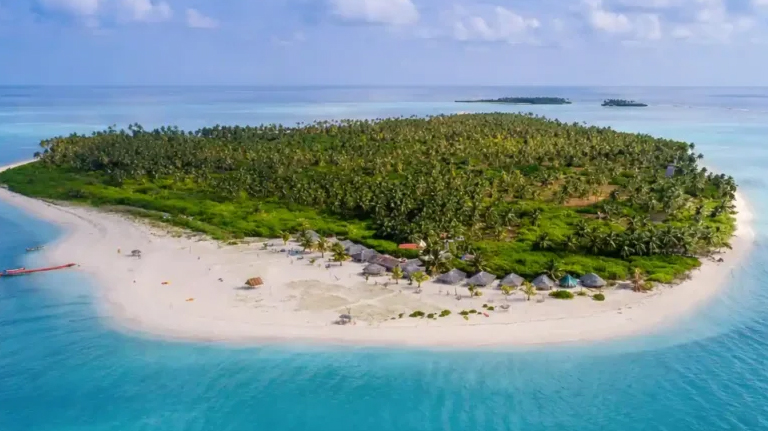
Kochi: Driven by an aggressive administrative push for eco-tourism and rising domestic interest, India’s pristine archipelago, Lakshadweep, is rapidly transforming into the country’s primary domestic alternative to the Maldives. Positioned as a budget-friendly tropical paradise, travel data and hospitality indices indicate that the 36-island Union Territory is capturing a significant share of the regional honeymoon and leisure travel market by offering an almost identical geographical experience at nearly one-third of the cost.

According to a sector report released by regional tourism operators, a standard five-day holiday package to Lakshadweep averages between ₹25,000 and ₹40,000 per person. This comprehensive cost structures in mandatory local entry permits, regional boat transfers, meals, and beachfront lodging. In stark contrast, a comparable vacation in the heavily commercialized Maldives starts at a baseline of ₹85,000 and frequently scales past ₹2,50,000 per couple once factoring in premium private island tariffs and mandatory international seaplane transfers.
Tourism department data reveals that Lakshadweep’s distinct advantage lies in its commitment to a low-impact, sustainable “eco-tourism model.” While the Maldives features extensively built-up marine infrastructures and overwater bungalows, Lakshadweep relies on simpler, nature-aligned beach cottages and local homestays across its key tourist hubs, including Agatti, Kadmat, and Kavaratti. Bangaram Island remains the sole destination in the archipelago permitted to serve alcohol at its primary resort, further preserving the tranquil, secluded atmosphere favored by couples looking to avoid mass commercial crowds.
Logistical convenience is also altering domestic travel patterns. Indian nationals can access the archipelago via daily flights from Kochi to Agatti Island or passenger ships, bypassing the complex international passport and foreign exchange requirements associated with a Maldivian holiday. Furthermore, strict environmental mandates enforced by the local administration—including a complete ban on single-use plastics and a daily cap on tourist entry through a strict permit registry—have kept the region’s coral reefs and turquoise lagoons in remarkably pristine condition.
The cultural immersion of the region, influenced heavily by traditional Malabar coastal cuisine and heritage, offers a distinct domestic connection that international resorts cannot replicate. Senior representatives from regional travel agencies noted that as travelers prioritize environmental sustainability alongside fiscal prudence, Lakshadweep is well-positioned to cement its status as India’s premier indigenous island destination.
Comments are closed.