

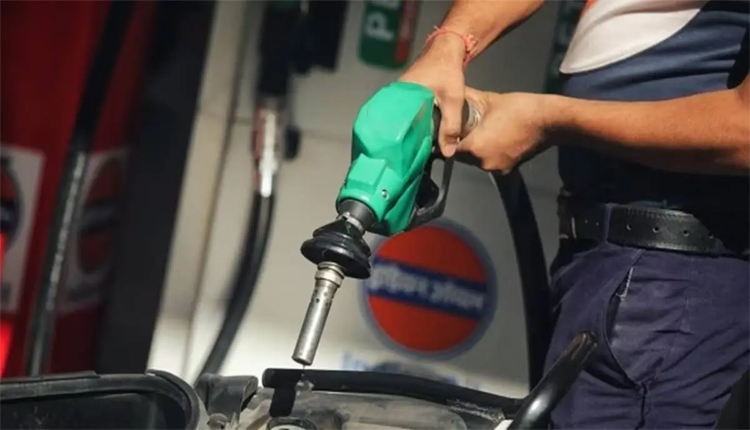
New Delhi: Whenever crude oil gets cheaper in the global market, Indian citizens naturally expect fuel prices to drop. However, the retail cost of petrol and diesel in India is not determined by crude oil rates alone. According to recent data presented in Parliament, eight distinct factors play a role in deciding what consumers pay at the fuel pump.

The primary ingredient is indeed crude oil, but its fluctuating global price is just one part of the equation. Since India imports a massive share of its crude requirements and pays in dollars, the exchange rate between the Indian Rupee and the US Dollar becomes the second crucial element. A weaker Rupee makes imports expensive, offsetting global price drops.
Refining costs form the third factor, as crude must be processed into usable fuel. The fourth is the transportation cost required to move the fuel from refineries to storage depots and local pumps. This logistical expense varies based on distance.
The fifth factor involves the profit margins of Oil Marketing Companies like Indian Oil, Bharat Petroleum, and Hindustan Petroleum. These state run firms adjust prices based on their inventory costs and market conditions. Dealer commission is the sixth element, guaranteeing a fixed margin for petrol pump owners on every litre sold.
Taxes make up the heaviest burden on retail fuel prices, serving as the final two factors. The Central Government levies excise duty, while state governments apply Value Added Tax and local charges. This separate state taxation is the reason fuel rates differ across Indian cities.
Official figures reveal the massive scale of these levies. In the financial year 2025 to 2026, the Central Government collected over Rs 4.75 lakh crore from the petroleum sector. This provisional data includes an excise duty collection of Rs 3,08,381 crore, along with crude oil cess, custom duty, and other tax components.
Understanding why retail rates remain steady despite global oil price crashes is vital. Oil firms often hold older stocks bought at higher prices. Furthermore, the government sometimes keeps taxes unchanged to protect revenue collections rather than passing the immediate benefit to the public.
Relief does arrive periodically. Official records note that the Central Government reduced excise duty in November 2021 and May 2022, saving citizens Rs 13 on petrol and Rs 16 on diesel. More recently, in March 2024, Oil Marketing Companies slashed prices by two rupees per litre. The pricing mechanism remains a complex balance between global economics and domestic fiscal needs.
Comments are closed.