

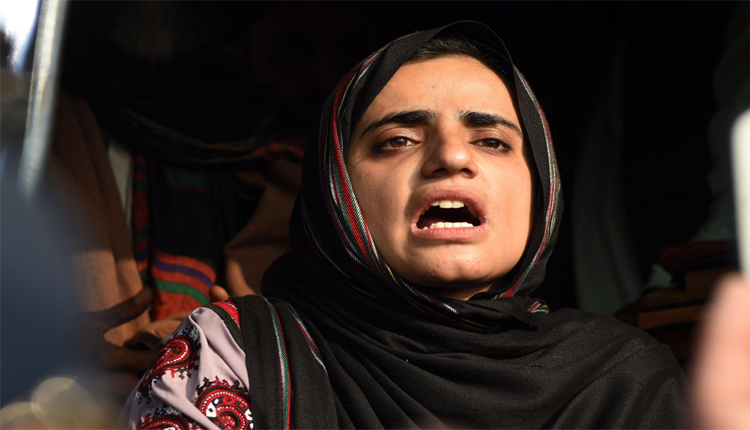
Quetta: Mass protests and intense political debates have flared up across Balochistan following a controversial ruling by a Pakistani anti-terrorism court. The court has sentenced prominent Baloch activist Dr. Mahrang Baloch to life imprisonment, triggering widespread demonstrations in Pakistan’s resource-rich but highly turbulent province.

The Quetta anti-terrorism court handed down the life sentence to Dr. Mahrang Baloch and Baloch Yakjehti Committee (BYC) leader Sibgatullah Shah. The prosecution linked the case to a 2024 protest in Gwadar, where a security official died during a clash. Facing charges of terrorism and murder, the leaders were convicted despite claims from their supporters that the charges are politically motivated. The BYC maintains that it operates strictly as a peaceful civil and human rights movement.
Born in 1993, Mahrang completed her MBBS to become a doctor. Her journey into activism is deeply rooted in personal tragedy. Her father, Abdul Ghaffar, a laborer, was allegedly abducted in February 2009. His body was recovered two years later bearing severe signs of torture. In 2017, her brother was also abducted and detained for three months. These experiences led Mahrang to challenge Pakistani security forces at a young age, eventually making her the central face of the Baloch rights movement.
Balochistan remains Pakistan’s largest province by landmass but has the lowest population. Despite being rich in gold, copper, natural gas, and home to the strategic Gwadar Port, local communities allege that the economic benefits are stripped away by the federal government, leaving locals impoverished. Activists have long accused the Pakistani establishment, led by Prime Minister Shehbaz Sharif and Army Chief General Asim Munir, of using brute force and security operations to silence dissent through enforced disappearances.
The court verdict has brought the province to a partial standstill, with several organizations calling for shutter-down strikes. Activists emphasize that this battle extends far beyond an individual, representing a larger fight for local representation and the rights of the Baloch people.
Comments are closed.