

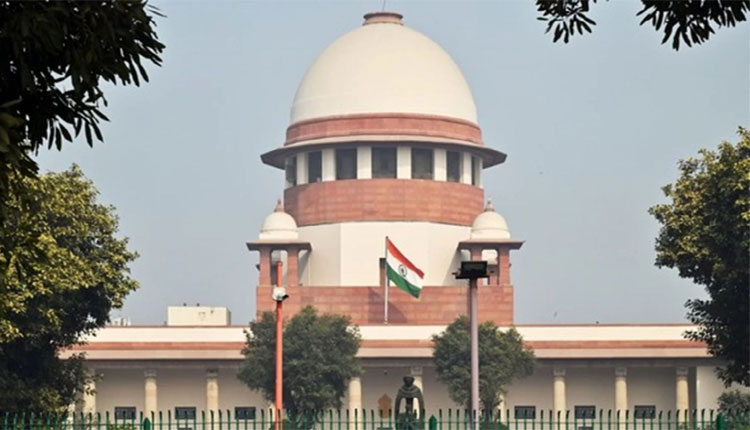
New Delhi: The Supreme Court on Wednesday dismissed a petition challenging the caste census, observing that the issue falls within the domain of government policy and the judiciary cannot interfere unless there is a violation of law.
A bench comprising Chief Justice of India Surya Kant, Justice Joymalya Bagchi and Justice Vipul M Pancholi heard the matter and declined to entertain the plea. The court said that whether the census should include caste based enumeration or not is a decision for the government to take.
The Chief Justice observed that the government must know the number of people belonging to backward classes so that appropriate welfare schemes can be framed for them. The court also said it cannot step into such policy matters merely because a different view may exist.
The petitioner had argued that caste data could be misused and that the government already had enough information, making a fresh caste count unnecessary. Responding to this, the court noted that the state has a legitimate need to understand the social composition of backward communities for planning and governance.
The bench made it clear that courts can intervene in government decisions only when they are contrary to law. Since the issue of caste enumeration was a policy choice, the petition was dismissed.
The decision comes at a significant time, as India’s Census 2027 exercise has already entered its first phase. The process began on April 1 after a delay of nearly five years due to the Covid pandemic. The census is being conducted in two phases and, for the first time, through a fully digital format.
In the first phase, details related to houses and household assets are being collected. This stage will continue till September 30, 2026, with every state and Union Territory required to complete field work within a 30 day window. A 15 day self enumeration facility has also been introduced before door to door surveys, allowing citizens to submit their details through an online portal.
The first phase has initially begun in eight states and Union Territories, including Andaman and Nicobar Islands, Goa, Karnataka, Lakshadweep, Mizoram, Odisha, Sikkim and selected areas of Delhi such as NDMC and Delhi Cantonment.
The second phase, which will collect information about individual members of each family, is scheduled to begin in 2027. With the Supreme Court refusing to intervene, the caste census debate now returns firmly to the political and administrative arena.

Comments are closed.