

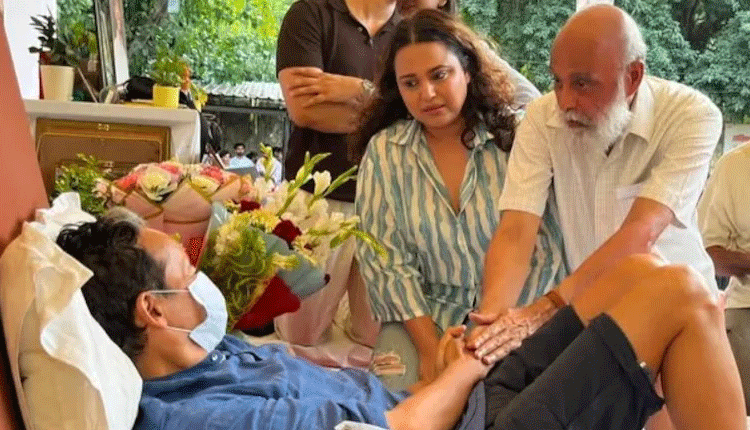
New Delhi: The forcible hospitalisation of prominent climate activist Sonam Wangchuk after a 20 day hunger strike has ignited a major national debate regarding medical consent laws and a patient right to refuse treatment in India. Despite experiencing severe dehydration and declining health at Safdarjung Hospital, Wangchuk has firmly refused all intravenous fluids and medications, raising complex legal questions about whether the state can force medical care on a protesting citizen.

Wangchuk was initially observing an indefinite fast at Jantar Mantar to protest against the massive NEET examination irregularities and demand systemic educational reforms. Following a rapid deterioration in his physical condition on the 21st day of his protest, Delhi Police intervened and shifted the 59 year old activist to the government hospital. Official medical bulletins revealed that his potassium levels had dropped dangerously low and he was showing strong signs of metabolic abnormalities, prompting immediate medical concern from the authorities.
Asserting his fundamental right to bodily autonomy, the activist has continuously declined oral rehydration solutions and intravenous drips. The legal situation became further complicated when his wife Gitanjali J Angmo formally instructed the hospital administration not to administer any treatment without her explicit written consent. Alleging a complete lack of transparency in his government medical care, she subsequently approached the Delhi High Court seeking his immediate transfer to a private medical facility of their choice.
Under Indian medical laws and ethical guidelines, doctors cannot forcefully treat a mentally competent adult without obtaining their proper informed consent. However, the legal landscape becomes highly complicated when a protesting individual faces an immediate and direct threat to their life. Addressing the ongoing controversy, the Delhi High Court recently observed that Wangchuk is not under any form of police detention and remains a completely free citizen. Yet, the judiciary firmly upheld the government decision to shift him to a medical facility, noting that the state has a fundamental constitutional obligation to protect human life during extreme medical emergencies and prevent severe health complications.
As the prominent education reformer continues his unyielding protest from the hospital ward, the ongoing standoff has brought intense judicial focus on the delicate balance between individual democratic rights and government duties. The medical fraternity and legal experts are closely monitoring the sensitive situation as it heavily impacts future interpretations of medical consent, bodily autonomy, and the fundamental right to peaceful democratic protest.
Comments are closed.