

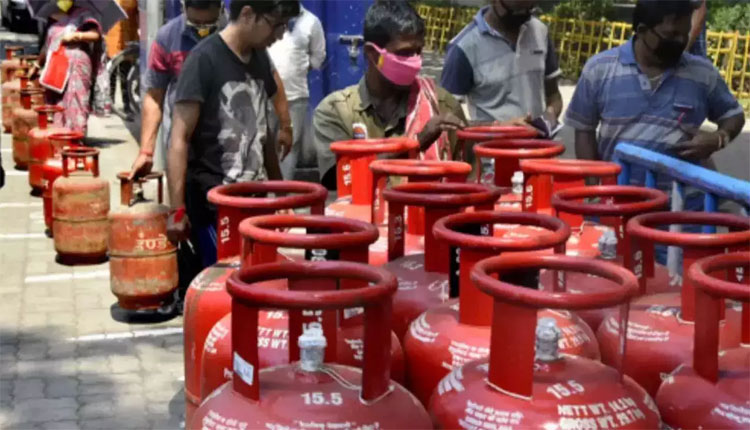
New Delhi: India’s cooking gas subsidy bill is projected to cross a staggering Rs 1 lakh crore in the current financial year following a sharp increase in international prices, sparking major concerns over the government’s fiscal health and expenditure management. The massive financial burden highlights the immense economic pressure of shielding domestic households from global energy shocks.

The projected subsidy payout exceeds the initial central budget allocation of Rs 30,000 crore by a whopping Rs 70,000 crore. This unprecedented surge is primarily because the central government and state run oil marketing companies are actively absorbing the massive impact of rising global fuel and LPG prices. The recent domestic price hike of Rs 29 per cylinder is a direct consequence of prolonged supply chain disruptions and geopolitical tensions in West Asia, which have significantly inflated international LPG rates.
According to a recent financial report by PL Capital, oil companies are currently facing an estimated revenue loss of Rs 490 on every domestic LPG cylinder sold. The growing financial strain is already visible in the government expenditure data for the early months of the current fiscal year. During April and May 2026, the government’s total spending on essential subsidies reached an alarming Rs 755.40 billion, marking a sharp 47 percent year on year increase from Rs 512.50 billion during the same period last year.
Furthermore, the data reveals that the specific petroleum subsidy payout jumped to Rs 2.80 billion during these two months, compared to absolute zero in the corresponding period of the previous year. Food and fertilizer subsidies have also witnessed a massive upward trajectory, further adding to the overall financial burden on the state treasury.
While the central administration maintains that Indian households continue to pay some of the lowest prices for cooking gas globally, economic experts remain highly cautious. Although the massive subsidy intervention successfully keeps essential cooking fuel affordable for millions of low income families, economists warn that sustaining a Rs 1 lakh crore subsidy bill could severely strain the national exchequer, potentially impacting long term fiscal deficit targets and broader economic planning.
Comments are closed.