

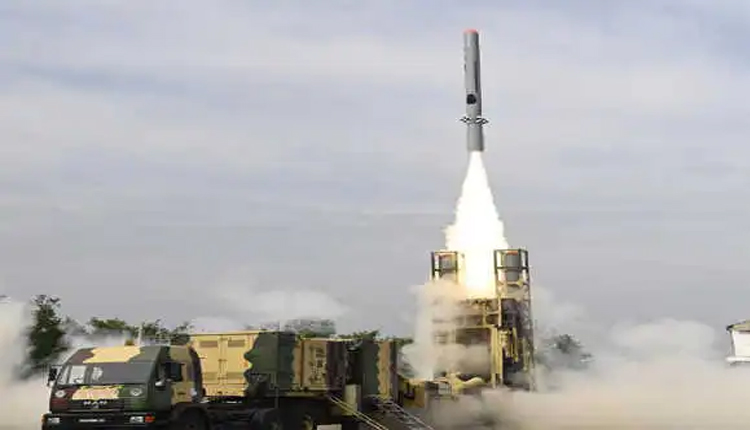
New Delhi: A late night cruise missile attack by Iran on two United Arab Emirates oil tankers has resulted in the death of one Indian national and left several others injured. The targeted strike has sparked major security concerns across the region. Furthermore, the deliberate choice to use cruise missiles instead of traditional ballistic weapons highlights a highly calculated military strategy by Iranian forces.

Following the tragic incident, the Ministry of External Affairs took swift diplomatic action on Tuesday. The ministry summoned key Iranian diplomats, including Deputy Ambassador Mohammad Javad Hosseini. Officials expressed grave concern over the Indian casualty and firmly demanded a formal explanation from the Iranian mission regarding the strike.
This specific attack has brought the operational differences between cruise and ballistic missiles into the global spotlight. A cruise missile functions much like a standard jet aircraft. It flies at extremely low altitudes to easily evade enemy radar detection. Powered continuously by a jet engine throughout its journey, its primary advantage lies in extreme precision. Equipped with advanced internal navigation systems, the missile can alter its course while in the air. It can weave through mountainous terrain or tall buildings to stay hidden. This unique capability makes it the ideal weapon for striking pinpoint targets like oil tankers, naval ships, or specific military bases while keeping surrounding damage to an absolute minimum.
Conversely, a ballistic missile operates on an entirely different scientific principle. It follows a massive arching trajectory, often exiting the atmosphere of the earth before plunging downward toward its target at hypersonic speeds. Once a ballistic missile is launched, its flight path cannot be altered. The sheer speed of the weapon makes interception incredibly difficult, often requiring highly advanced defense shields like the THAAD or Patriot surface to air systems. Militaries typically reserve ballistic missiles for massive destruction at distant targets, such as entire cities or major enemy installations.
Defense experts point out that the choice of weapon always dictates the military objective. Ballistic missiles remain the preferred choice for overwhelming speed and covering vast distances to bypass standard defenses. On the other hand, cruise missiles are actively deployed when radar evasion, extreme accuracy, and a focused blast radius are the primary tactical goals.
Comments are closed.