

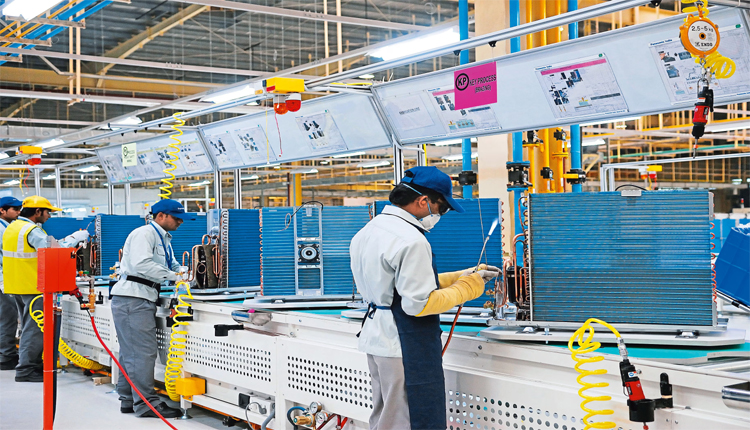
New Delhi: Showing resilience amidst global economic uncertainties, India’s industrial production witnessed a robust growth of 5.1 percent in May. This marks a steady acceleration from the 4.9 percent growth recorded in April. The upward trajectory was largely driven by a strong performance in the manufacturing sector and a massive surge in electricity generation due to severe heatwave conditions across the country.

The manufacturing sector, which holds a massive 76 percent weightage in the Index of Industrial Production, emerged as the backbone of this economic expansion. Factory output in this segment grew by a solid 5.5 percent in May. A detailed breakdown shows that the production of electrical equipment saw an exceptional jump of 20.8 percent. Other key contributors included metal products with a 15.5 percent rise, motor vehicles growing by 14.5 percent, and the computer and electronics sector registering an 11.4 percent increase. This broad expansion in heavy machinery and capital goods indicates that infrastructure spending and domestic investment demand remain at highly elevated levels.
The sweltering summer temperatures also played a significant role in boosting the overall industrial figures. Electricity and gas supply emerged as major growth drivers by recording a 9.9 percent increase. Looking specifically at electricity generation, the growth stood at an impressive 11.1 percent. The extreme heat pushed the demand for cooling appliances like air conditioners and coolers to record highs, which directly translated into these elevated power production numbers.
Consumer purchasing power, particularly in urban centres, showed highly encouraging signs during this period. The production of capital goods surged by 12.9 percent, which is significantly higher than the 9.5 percent recorded during the same month last year. Similarly, consumer durables such as televisions, refrigerators, and automobiles posted a 7.2 percent growth. This reflects a strong appetite for discretionary spending among city dwellers. Meanwhile, the output of daily use items, categorized as consumer non durables, grew at a modest 3.6 percent.
While most sectors painted a positive macroeconomic picture, a few segments witnessed a noticeable slowdown. The mining sector contracted by 1.6 percent, heavily weighed down by lower production of crude oil, natural gas, and non metallic minerals. Additionally, certain consumer linked areas like apparel manufacturing fell by 8.8 percent, while refined petroleum dropped by 4.7 percent. Despite these localized soft spots, the overall factory output data signals that the broader economic engine continues to gather momentum, creating a favorable environment for sustained business opportunities and job creation in the coming months.
Comments are closed.