

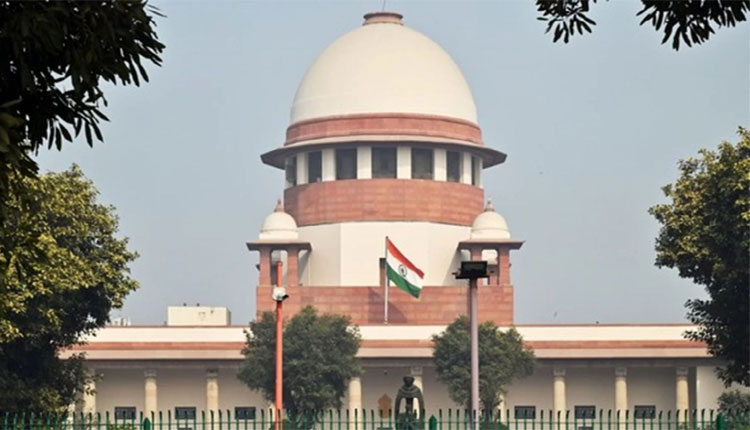
New Delhi: In a significant judicial development, the Supreme Court of India has ruled that a remission policy framed under the Governor’s constitutional powers under Article 161 cannot be superseded or overruled by a subsequent statutory policy enacted under the Code of Criminal Procedure (CrPC). This judgment marks a critical clarification on the extent of executive and constitutional authority, reinforcing that an independent constitutional mandate holds a higher pedestal than routine statutory guidelines.

The bench, comprising Justice Sanjay Karol and Justice Nongmeikapam Kotiswar Singh, passed the order while allowing an appeal filed by a life convict. The petitioner had challenged the rejection of his premature release plea by the Haryana government. Authorities had denied the relief based on a 2008 statutory policy, arguing that it superseded the more liberal 2002 remission policy.
The Supreme Court examined the two policies and observed that the 2002 policy was expressly rooted in the Governor’s powers under Article 161. In contrast, the 2008 policy invoked the statutory provisions of the CrPC. The Court emphasized that since the 2002 policy was a direct exercise of the Governor’s constitutional authority, it remains distinct and independent, uninfluenced by statutory changes.
The bench clarified that the findings in the 2021 case of State of Haryana v. Raj Kumar were rendered per incuriam, as they incorrectly treated the 2002 policy as a mere statutory memo. By aligning with the precedent set by a larger bench in the State of Haryana v. Jagdish case, the Court underscored that the more beneficial and liberal policy must prevail when considering the release of a prisoner.
This verdict provides clarity on the legal hierarchy between constitutional and statutory frameworks. By upholding the sanctity of Article 161, the Court has ensured that the Governor’s power to grant clemency remains an essential, unbridled tool for ensuring justice and mercy. While the ruling applies prospectively and will not trigger the reopening of previously decided cases, it establishes a clear roadmap for state governments to respect the constitutional source of remission policies.
The Court has directed the Haryana government to reconsider the appellant’s case under the 2002 policy within four weeks. As a result, states may now find themselves managing two distinct sets of remission guidelines, necessitating a more cautious approach by authorities when interpreting the interplay between constitutional mandates and statutory procedures.
Comments are closed.