

New Delhi: With urban households across India increasingly warming to terrace gardening, growing essential kitchen staples at home is no longer restricted to those with sprawling backyards or agricultural land. Horticultural experts and urban farmers note that root vegetables like potatoes can be successfully cultivated right on rooftops and balconies using containers and fabric grow bags.

According to agricultural guidelines, space constraints need not deter enthusiasts from taking up tuber cultivation. A single potato plant typically requires a grow bag measuring approximately 12 to 15 inches in both width and depth. Setting up two to three grow bags demands barely two to three square feet of terrace area, while a row of five to six bags requires roughly 15 to 16 feet of open space to ensure adequate spacing. Gardeners, however, must ensure that the roof surface has adequate drainage and can handle the damp load before laying out rows of heavy containers.
Soil preparation remains the foundation for a good harvest. Specialists recommend combining regular garden soil with well-rotted farmyard manure (gobar ki khaad) or organic vermicompost to create a loose, porous medium that avoids water stagnation. Tubers need friable soil so that roots and developing tubers expand without hindrance.
For sowing, growers can use certified seed potatoes or everyday kitchen tubers that have begun sprouting small buds, commonly known as “eyes”. These sprouted tubers are planted roughly three to four inches deep into the soil bed, with one or two seed potatoes placed per container.
For robust tuber development, potato plants demand at least five to six hours of uninterrupted direct sunlight daily alongside measured, moisture-maintaining irrigation that prevents soggy roots. As the green foliage ascends, growers must periodically practise “earthing up”—adding fresh compost and loose soil around the emerging stem. This shields young underground tubers from direct sunlight, preventing them from turning green and bitter, while providing extra volume for root proliferation.
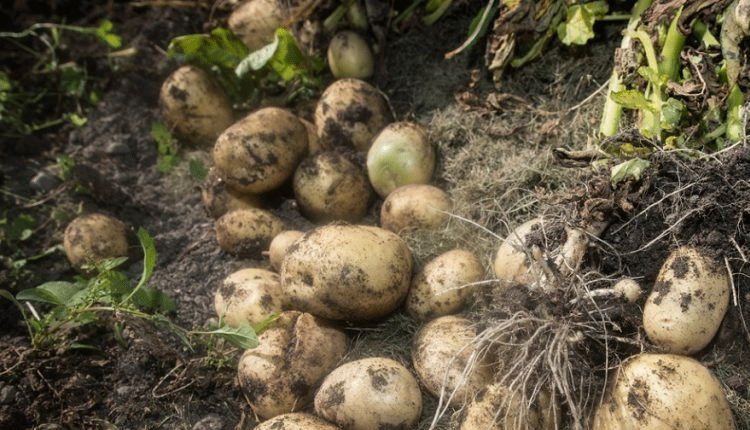
Depending on climatic conditions and the chosen variety, a crop generally matures within 80 to 100 days. Once the above-ground leaves begin yellowing and withering, the tubers are ready to be carefully unearthed and harvested fresh from the terrace.