

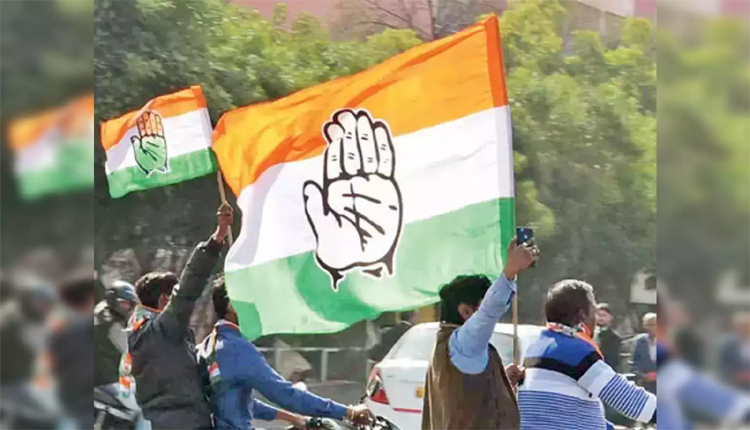
New Delhi: A major political controversy has erupted over the implementation of the Forest Rights Act (FRA), 2006, after the Union Ministry of Tribal Affairs communicated that seeking Gram Sabha consent is not legally mandated for stage-two forest clearances. The ruling government’s stance has drawn fierce criticism from the opposition Congress party, which accused the Centre of attempting to dilute tribal rights to fast-track large infrastructure and mining projects.

The debate came to the forefront following discussions between the Ministry of Power and the Ministry of Tribal Affairs regarding delays in major hydroelectric projects, such as those undertaken by the National Hydroelectric Power Corporation (NHPC). A parliamentary standing committee had previously reported that infrastructure projects faced significant bottlenecks—averaging 106 months for forest clearances—largely due to the mandatory requirement of obtaining consent from local village assemblies.
In response, the Ministry of Tribal Affairs clarified that neither the Forest Rights Act of 2006 nor its governing rules contain provisions explicitly requiring Gram Sabha consent for non-forestry diversions, adding that such administrative clearances fall outside its primary jurisdiction.
Reacting sharply to the development, Congress General Secretary and Rajya Sabha MP Jairam Ramesh lashed out at the government. He termed the ministry’s position a “shocking stance” that reflects a serious misunderstanding of the law and a complete “abdication of statutory responsibility.”
“The Tribal Affairs Ministry is designated as the nodal ministry to implement the FRA, 2006, and to protect the rights it guarantees. The ministry cannot simply distance itself from the operation of the law when those very rights are at stake and under real threat,” Ramesh stated. He further alleged that the ministry’s sudden shift contradicted its own earlier guidelines, questioning whether the Centre was buckling under pressure from corporate conglomerates and mining interests.
The Congress party emphasized that provisions under Section 4 and Section 5 of the FRA, read alongside landmark judicial precedents like the Supreme Court’s Niyamgiri case, firmly establish the central role of Gram Sabhas in safeguarding local forest resources. Opposition leaders warned that undermining these legal safeguards would jeopardize the traditional livelihoods of forest-dwelling communities and weaken the statutory framework enacted to protect them.