

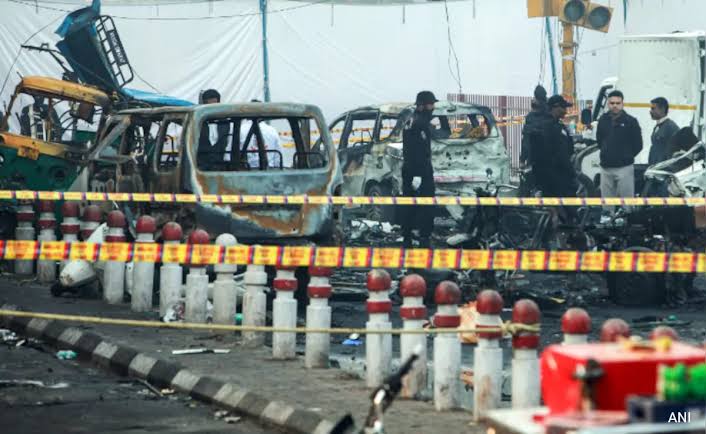
New Delhi: In a chilling revelation, the National Investigation Agency (NIA) chargesheet concerning the November 2025 Delhi Red Fort car bombing has exposed how terrorists leveraged easily accessible digital platforms—including artificial intelligence—to execute the high-intensity strike. According to the voluminous 7,500-page document, the accused extensively used YouTube tutorials and the AI chatbot ChatGPT to research explosive engineering and rocket-making techniques.

The investigation identified Dr Umar Un Nabi, an assistant professor and doctor, as the primary suicide bomber. DNA fingerprinting from the blast site conclusively proved that Dr Umar was inside the explosives-laden Hyundai i20 when it detonated on November 10 near the historic monument, claiming 15 lives. The Red Fort was specifically selected as the target because it stands as a powerful symbol of the Indian state.
The ‘Democratisation’ of Terror Technology The NIA has termed the suspects’ heavy reliance on everyday civilian technology as the “democratisation of terror technology.” Key findings regarding their methodology include:
-
AI and Video Tutorials: Key accused, including bomb-maker Jasir Bilal Wani, utilised ChatGPT and YouTube to learn IED designs, rocket construction, and the precise chemical ratios required for lethal explosive mixtures. They reportedly relied on AI-assisted responses at every stage of their chemical experimentation.
-
E-Commerce Procurement: Advanced triggering mechanisms—such as RF remote relays, inductive proximity switches, heat guns, and Piezo plates—were openly purchased on platforms like Flipkart using the cash-on-delivery mode. Dr Umar Un Nabi allegedly co-funded and received these deliveries.
-
Explosive Composition: Forensic analysis from laboratories in Chandigarh and Gandhinagar confirmed the use of TATP (Triacetone Triperoxide) as the primary explosive in the Vehicle-Borne Improvised Explosive Device (VBIED). This was further enhanced by ammonium nitrate and agricultural-grade potassium nitrate, which were extracted from NPK fertilisers.
Uncovering the Trail The NIA’s investigation detailed how the terror module operated with alarming efficiency without needing formal militant training camps. By sourcing materials like acetone, hydrogen peroxide, and laboratory equipment to rented premises, the group constructed the deadly VBIED independently. A command mechanism covered in red tape, intended to remotely activate or trigger the explosives, was also recovered near the blast site.
The special NIA court recently took cognisance of the chargesheet, marking a crucial step towards prosecuting the sprawling network of “radicalised individuals” and facilitators behind one of the national capital’s most sophisticated terror plots.
Comments are closed.