

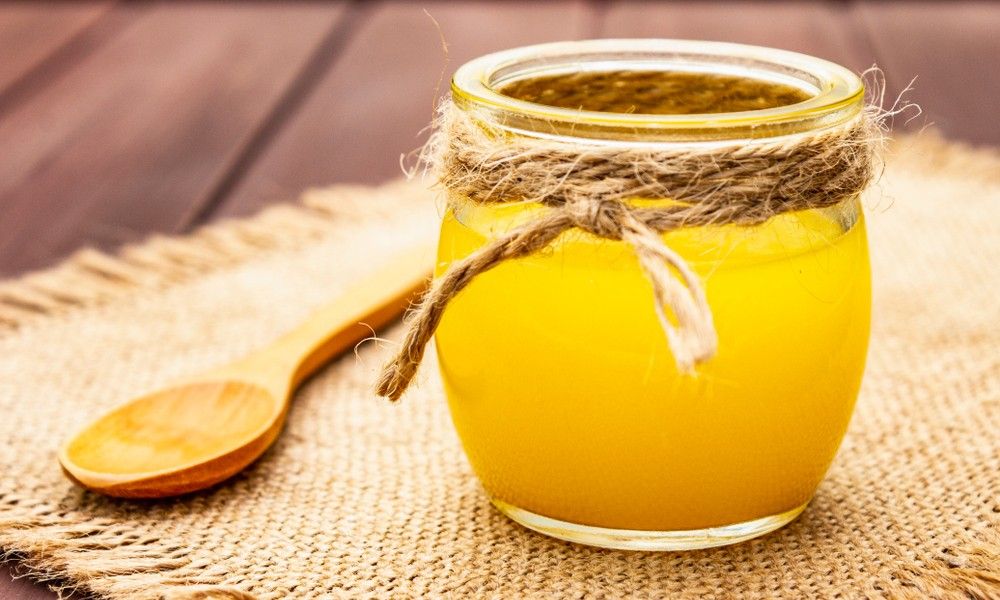
New Delhi: In Indian households, pure desi ghee is widely revered as a nutrient-rich superfood essential for overall well-being. However, a common dilemma often plagues health-conscious individuals: can consuming excessive amounts of desi ghee lead to the formation of stones in the gallbladder? Medical experts have weighed in to clarify the science behind dietary fats and gallbladder health.

According to Dr. Jatinder Singh Bhogal, Senior Consultant in Gastroenterology and Hepatology at Kailash Deep Hospital, eating ghee in excess does not automatically or directly translate to immediate gallbladder stone formation. Gallstones typically develop when there is a fundamental chemical imbalance within the bile stored in the gallbladder, which helps the body digest dietary fats.
“Simply put, just eating excessive ghee will not directly cause stones overnight, but it is certainly not ideal for overall metabolic health,” Dr. Bhogal explained. He noted that desi ghee is rich in saturated fats and high in calories. When consumed in large quantities over a prolonged period, it can contribute to weight gain and elevated cholesterol levels—two indirect risk factors that can increase the likelihood of gallbladder issues.
Furthermore, experts emphasize that for individuals who already have existing gallstones, consuming heavy or fatty meals can trigger severe discomfort. When a person ingests rich foods, the gallbladder contracts to release bile to aid digestion. During this process, a pre-existing stone can shift and obstruct the bile duct, causing sudden, sharp abdominal pain.
Weighing in on the metabolic perspective, Dr. Anil Arora, Chairman of Liver, Gastroenterology, and Pancreatobiliary Sciences at Sir Ganga Ram Hospital, noted that gallbladder stone disease is primarily a complex metabolic condition. While excessive dietary fat might not be the sole direct trigger for stone creation, consuming heavy fats like desi ghee can significantly aggravate symptoms once the condition is established.
Doctors advise that warning signs such as severe pain in the upper right abdomen, pain radiating toward the back or right shoulder, frequent vomiting, fever, or yellowish discoloration of the eyes and skin should never be ignored. If such symptoms appear, patients are urged to seek immediate medical evaluation rather than relying on home remedies. Moderation remains the key to enjoying dietary fats safely without compromising long-term health.
Comments are closed.