

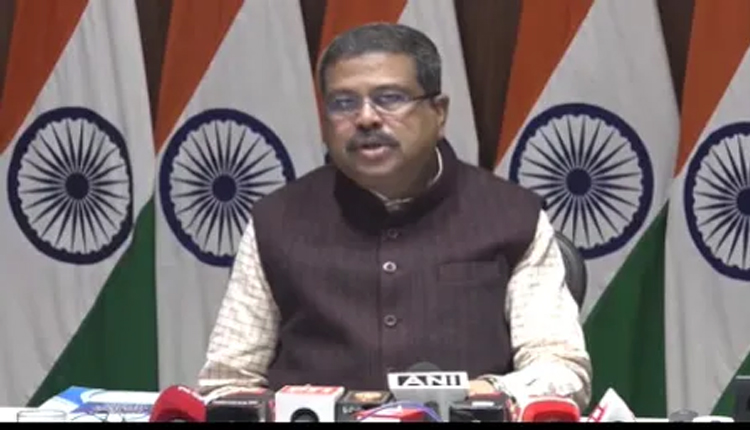
NewDelhi: In a significant political development, Union Education Minister Dharmendra Pradhan has stepped down from his post amid the escalating NEET paper leak controversy and widespread student protests. Following his resignation, Prime Minister Narendra Modi assigned the additional charge of the Education Ministry to Union Minister Pralhad Joshi.

The resignation comes after mounting pressure from various student groups and political outfits. The Cockroach Janta Party held a relentless 33 day protest at Jantar Mantar in the national capital, demanding immediate accountability for the examination irregularities. The opposition also aggressively cornered the central government over the issue. In response to the crisis, the government has announced plans to introduce stricter laws to prevent future paper leaks.
While the resignation of an education minister over an examination scandal marks a major moment, Indian political history has witnessed several leaders leaving their cabinet berths due to public anger, tragedies, or corruption allegations.
One of the most cited examples of political accountability is Lal Bahadur Shastri. In November 1956, he resigned as Railway Minister following the Ariyalur train tragedy in Tamil Nadu, which claimed over 140 lives. He had previously offered to step down after the Mahbubnagar accident, but then Prime Minister Jawaharlal Nehru had rejected the offer. Similarly, in August 1999, Nitish Kumar resigned as Railway Minister, taking moral responsibility for the devastating Gaisal train collision in West Bengal.
Security failures have also prompted major ministerial exits. Shivraj Patil, who served as the Home Minister from 2004 to 2008, stepped down on November 30 2008. He took moral responsibility for intelligence failures following the horrific Mumbai terror attacks on November 26 that left 166 people dead. P Chidambaram subsequently replaced him.
Corruption controversies have forced several high profile resignations as well. On November 14 2010, then Telecom Minister A Raja resigned amid the 2G spectrum allocation scandal. He stated the decision was made on the advice of DMK chief M Karunanidhi to avoid embarrassing the government, though he maintained his innocence. Similarly, Union Law Minister Ashwani Kumar resigned on May 10 2013 over allegations of interfering with a CBI status report regarding the coal block allocation scam. He claimed the exit was meant to end unnecessary political disputes.
The departure of Dharmendra Pradhan highlights the continuing tradition of ministers bowing to public pressure and taking responsibility during national crises. The focus now shifts to how the newly appointed leadership will handle the ongoing education sector reforms and address student grievances across the country.
Comments are closed.