

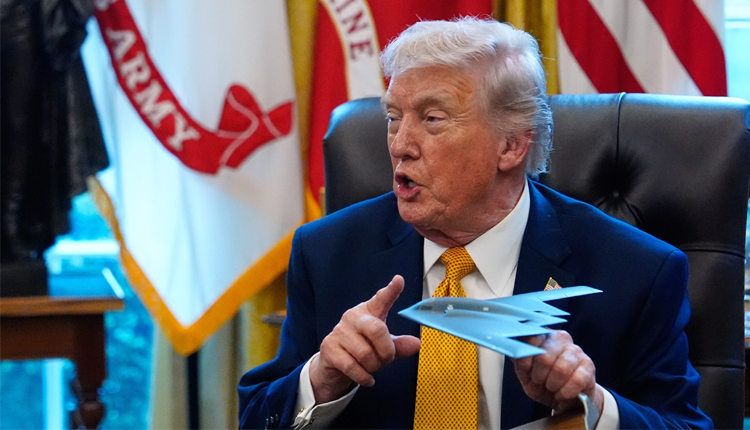
Washington: The marble pillars of the United States Senate chamber have echoed with decades of fierce foreign policy debates, but Tuesday afternoon witnessed an unprecedented, dramatic constitutional showdown. In a razor-thin 50-48 vote that caught political observers by surprise, the legislature successfully passed a War Powers resolution aimed at stripping President Donald Trump of his authority to conduct unilateral military operations against Iran.

This historic legislative move marks the first time a war powers resolution has successfully cleared both chambers of Congress, following its passage in the House of Representatives on June 3. The vote represents a stunning, systemic challenge to executive military overreach. For months, successive administrations have systematically expanded their war-making capabilities without seeking formal domestic consent. By forcefully invoking the 1973 War Powers Act, Congress has staged a coordinated rebellion to reclaim its constitutional right to declare war.
The dramatic turnaround was made possible by an extraordinary breach in party discipline. In a narrowly divided Senate where Donald Trump’s Republican Party holds the majority, four prominent conservative senators—Susan Collins of Maine, Lisa Murkowski of Alaska, Rand Paul of Kentucky, and Bill Cassidy of Louisiana—crossed the aisle to vote alongside the Democrats. Conversely, Senator John Fetterman of Pennsylvania stood out as the sole Democrat to vote against the measure, siding with the administration.
The vote was further swayed by the critical absence of two key Republicans, including former Majority Leader Mitch McConnell, who remains hospitalized. The legislative strike comes at a highly sensitive time for the White House. Currently, Vice President JD Vance is actively stationed in Switzerland, working to negotiate a broader diplomatic settlement under a 60-day Memorandum of Understanding (MoU) signed last week. Concurrently, Defense Secretary Pete Hegseth is lobbying Capitol Hill for a massive $80 billion emergency supplemental fund to replenish heavily depleted military stockpiles.
“Trump’s historic blunder in Iran will go down in the history books as one of the worst foreign policy forays America has ever made,” Senate Democratic Leader Chuck Schumer stated on the chamber floor ahead of the vote, pointing to skyrocketing domestic gas prices and the tragic loss of 13 American service members during the active hostilities.
While the resolution is structurally a powerful symbolic rebuke due to a 1983 Supreme Court precedent that weakened the legislative veto, its passage heavily dents the administration’s political standing ahead of the high-stakes November midterm elections. Conservative critics, such as Senator James Risch of Idaho, have warned that the resolution will weaken Vance’s leverage, giving Tehran an incentive to simply walk away from the negotiation table. Nevertheless, with the Pentagon still seeking massive funds to bankroll the unpopular conflict, the bipartisan push has made one reality clear: Lutyens’ style imperial presidencies will no longer enjoy an open-ended blank check from the American taxpayer.
Comments are closed.