

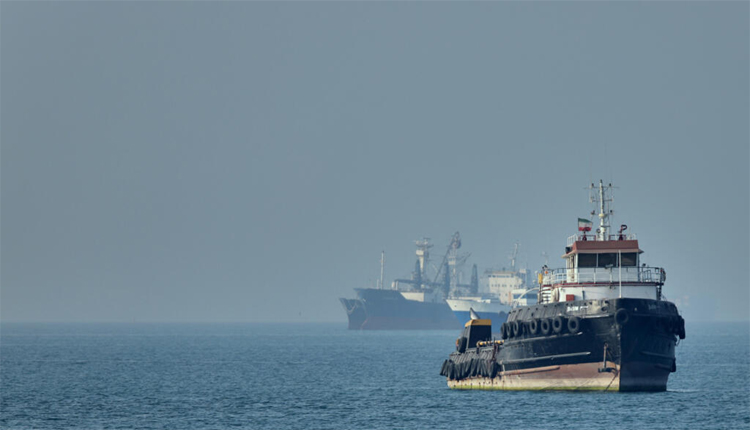
New Delhi: Just days after the United States proclaimed a breakthrough peace agreement to open the Strait of Hormuz permanently without any transit duties, Iran has sent shockwaves through global markets by announcing plans to impose mandatory fees on commercial ships.

Iranian parliament speaker and chief negotiator Mohammad Bagher Ghalibaf declared that the critical maritime chokepoint will never return to its status from before the war, directly challenging Washington claims and raising fresh doubts over the stability of the fragile peace accord.
The development comes on the heels of an electronic memorandum of understanding signed recently by United States President Donald Trump and Iranian leaders to end months of intense maritime conflict.
The hostilities, which began in February this year, had severely disrupted global energy supply chains and driven up fuel prices worldwide. While the Trump administration insisted that the crucial trade corridor would remain entirely free of tolls under the new diplomatic framework, internal political factions in Tehran have rejected this narrative, calling the unilateral American interpretations a failure.
Speaking during an interview on state television, Ghalibaf clarified that while vessels would be granted free passage during an initial sixty day transitional window, Tehran intends to exercise its complete sovereignty over the natural waterway thereafter.
The Iranian speaker asserted that the United States has inadvertently turned the economic potential of the strait into a reality for Iran. He added that the fees would be levied under the category of maritime navigation, environmental protection, and insurance services. Warning international stakeholders against any resistance, the chief negotiator stated that the diplomatic conflict could quickly escalate back into a military confrontation because Iranian forces still have their fingers on the trigger.
This sudden policy divergence has jittered global shipping companies and international commodity traders who were anticipating a swift normalization of freight operations. For major importing nations like India, any long term fee structure or renewed instability in the Persian Gulf threatens to destabilize domestic fuel and commodity prices.
Maritime experts are already raising concerns about the legal definition of these charges, noting that charging vessels for passing through a natural waterway violates established international maritime laws.As negotiators prepare to meet in Switzerland for the formal physical signing ceremony of the peace framework, this unexpected hurdle underscores the immense diplomatic challenges that lie ahead.
The conflicting stances maintained by Washington and Tehran demonstrate that while a cessation of active military hostilities has been achieved, securing a consensus on international trade rights remains a distant goal. The true test of the peace deal will depend on whether both nations can resolve these territorial disputes without plunging the global economy back into another prolonged energy crisis.
Comments are closed.