

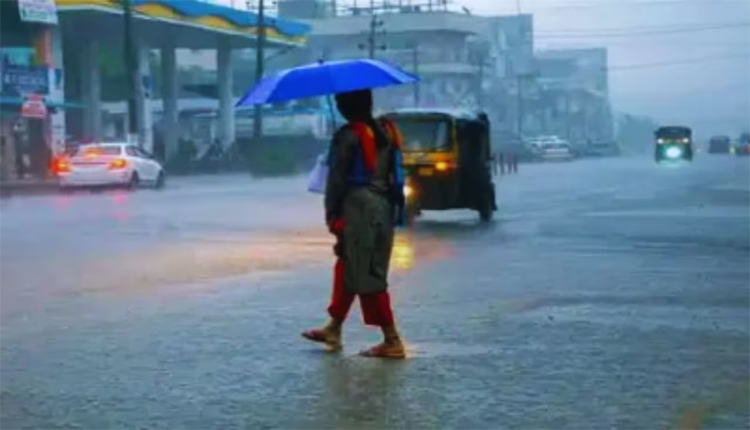
New Delhi: India is witnessing increasingly unpredictable weather patterns, with intense rainfall in southern regions occurring simultaneously with severe heatwave conditions across parts of northern India. Climate scientists describe this phenomenon as “climate whiplash,” a situation in which extreme weather events rapidly alternate between opposite conditions, creating fresh challenges for agriculture, infrastructure and public health.

Over the past few weeks, several southern states have experienced heavy pre monsoon and monsoon rainfall, leading to waterlogging, localised flooding and disruptions to daily life. At the same time, large parts of northern and north western India have continued to grapple with soaring temperatures, with heatwave conditions affecting millions of residents.
Meteorologists attribute the unusual contrast to a combination of climatic factors, including changes in atmospheric circulation, rising global temperatures and the influence of large scale weather systems. Experts say climate change is increasing the frequency and intensity of extreme weather events, making seasonal patterns less predictable than in previous decades.
The India Meteorological Department (IMD) has observed that weather extremes are becoming more common across the country. While monsoon activity has advanced over parts of southern and eastern India, hot and dry conditions have persisted in several northern states. This sharp regional variation has become a growing concern for climate researchers and disaster management authorities.
Scientists note that climate whiplash does not simply refer to heatwaves followed by rainfall. It also includes sudden shifts from drought to flooding, prolonged dry spells followed by intense downpours and other abrupt weather transitions. Such conditions can place enormous stress on agriculture, water resources and urban infrastructure.
The phenomenon has significant implications for farmers. Excessive rainfall in one region and prolonged heat in another can affect crop yields, disrupt sowing schedules and increase uncertainty in agricultural planning. Experts warn that changing weather patterns may require new adaptation strategies to protect food security and rural livelihoods.
Public health is another major concern. Heatwaves increase the risk of dehydration, heatstroke and other temperature related illnesses, while heavy rainfall can trigger outbreaks of waterborne diseases and create sanitation challenges. Urban areas are particularly vulnerable due to high population density and pressure on civic infrastructure.
Climate experts have also highlighted the possible role of El Niño and broader ocean atmospheric interactions in influencing weather variability across South Asia. However, they stress that long term global warming remains a key factor behind the increasing intensity of extreme weather events.
As India enters the core monsoon season, authorities are closely monitoring weather developments across different regions. Disaster management agencies, state governments and meteorological departments have been strengthening preparedness measures to respond to potential emergencies.
Comments are closed.