

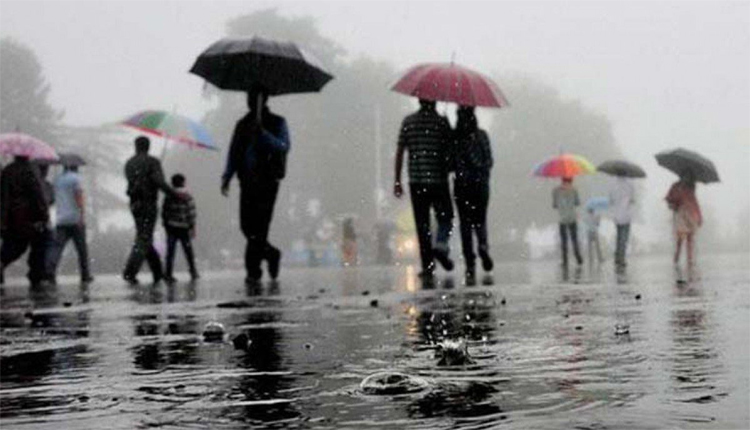
New Delhi: The arrival and progress of the southwest monsoon remain among the most closely watched weather developments in India, given their crucial impact on agriculture, water resources, and the broader economy. As the country awaits the next phase of the monsoon’s advance, meteorologists have highlighted why Kerala serves as the traditional gateway for the rainy season and how the weather system spreads across the Indian subcontinent.

The India Meteorological Department (IMD) monitors the onset of the monsoon each year, with Kerala typically becoming the first state to receive monsoon rains. The phenomenon occurs due to Kerala’s geographical location along the southwestern coast of the Indian peninsula, making it the first major landmass encountered by moisture laden winds originating from the Arabian Sea.
The southwest monsoon is broadly divided into two branches. The first is the Arabian Sea branch, which strikes the Kerala coast before moving northward along the Western Ghats. The second is the Bay of Bengal branch, which travels towards northeastern India and subsequently advances across the eastern and northern regions of the country.
According to meteorological experts, the monsoon is driven by seasonal wind patterns created by differences in temperature and atmospheric pressure between land and ocean surfaces. During summer, the Indian landmass heats up more rapidly than surrounding oceans, creating low pressure zones that attract moisture carrying winds from the sea. These winds bring widespread rainfall across much of the country between June and September.
Weather officials have indicated that favourable conditions continue to support the monsoon’s progress. Forecasts suggest that the system is expected to advance further into additional parts of the country around June 4, depending on atmospheric conditions and rainfall activity over the coming days.
The monsoon plays a critical role in India’s economy, particularly for the agriculture sector, which remains heavily dependent on seasonal rainfall. Adequate monsoon precipitation supports crop production, replenishes reservoirs, improves groundwater levels, and contributes to overall economic stability. Conversely, any delay or deficiency in rainfall can affect farming operations and water availability.
Meteorologists also note that while the monsoon follows a broadly predictable pattern, variations in its intensity, timing, and distribution are influenced by several global and regional weather factors, including ocean temperatures and atmospheric circulation patterns.
As the monsoon continues its journey across India, millions of farmers, businesses, and policymakers will closely track its progress. The performance of this year’s rainy season is expected to have a significant bearing on agricultural output, rural incomes, and water security across the country in the months ahead.
Comments are closed.