

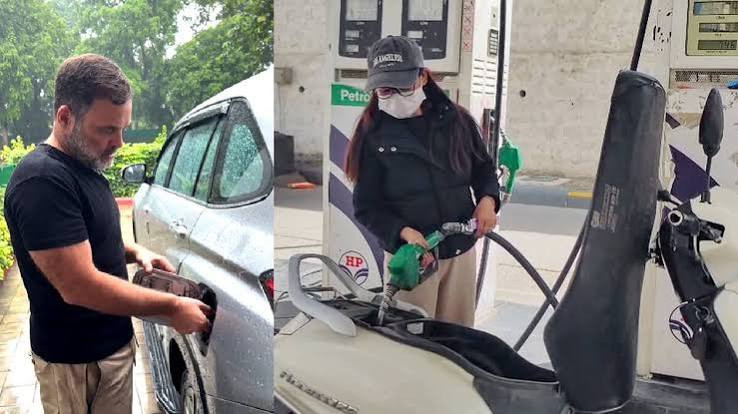
New Delhi: Leader of Opposition in the Lok Sabha Rahul Gandhi launched a sharp critique against the central government on Friday over the nationwide rollout of E20 petrol, alleging that the ethanol-blended fuel policy is damaging vehicles, imposing financial burdens on citizens, and amounting to direct theft.

The controversy centers around the government program introducing petrol blended with 20 percent ethanol, a measure aimed at reducing crude oil imports and carbon emissions. However, the policy has faced growing criticism from opposition leaders and motorists over concerns regarding lower fuel efficiency, potential engine wear in older vehicles, and higher overall operational costs for vehicle owners.
Taking to the social media platform X, Gandhi shared a video clip in which he inspected a vehicle fuel tank and addressed the public on the matter. Using a popular Hindi idiom to describe the scale of the alleged irregularities, he remarked that instead of minor discrepancies, the entire situation is deeply flawed. He stated that the E20 issue is a major concern affecting everyday citizens.
Gandhi further accused the administration of widespread corruption and stated that the high volume of policy challenges requires careful prioritization. He asserted that the current fuel blending approach is harming personal vehicles such as cars and scooters, adversely affecting families, and directly draining money from the pockets of ordinary citizens. The senior Congress leader assured the public that his party intends to take up the issue in a massive way to address consumer grievances.
The remarks follow recent criticisms from other opposition figures regarding the economic impact of the policy. Congress leaders have previously pointed out that consumers have faced additional financial expenditures due to reduced mileage from blended fuel, while advocating for greater consumer choice and financial incentives. Meanwhile, the central government has consistently maintained that ethanol blending supports domestic agricultural sectors and strengthens energy security by curbing reliance on foreign oil.
Comments are closed.