

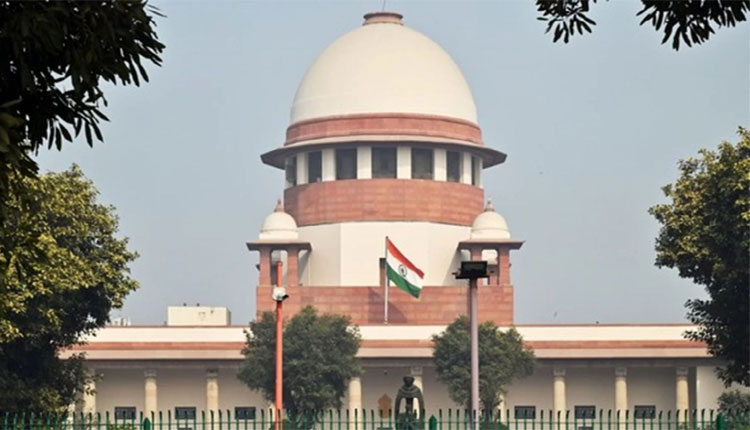
New Delhi: The Supreme Court on Friday made strong observations in the NEET UG paper leak matter, questioning the National Testing Agency over lapses in the conduct of the examination and asking it to learn from institutions such as the Union Public Service Commission.

A bench of Justice P S Narasimha and Justice Alok Aradhe was hearing petitions linked to the NEET UG 2026 paper leak controversy. During the hearing, the court asked how such a failure took place despite a high powered committee and monitoring mechanism being in place. Justice Narasimha observed that if a failure had occurred even after these measures, either the original recommendations had some gaps or they were not properly implemented.
Solicitor General Tushar Mehta, appearing for the Centre, told the court that the matter was being monitored at the highest level and that Prime Minister Narendra Modi was personally keeping track of the situation. He also informed the court that a new mechanism had been put in place for the June 21 examination to ensure that past mistakes are not repeated.
Former ISRO chairman Dr K Radhakrishnan, who headed the committee formed to suggest reforms, told the court that the panel had made 35 long term and 60 short term recommendations. He said most of these suggestions had been implemented and assured the court that the upcoming examination would be conducted with special attention to security and transparency.
The court stressed the need for real accountability, saying such incidents would not stop unless responsibility was clearly fixed. It observed that the issue was extremely sensitive because it directly affected lakhs of students who prepare for competitive examinations with years of hard work and family support.
According to the NTA affidavit, NEET UG 2026 was conducted on May 3 at 5,432 centres in India and 14 centres abroad, with around 22.05 lakh candidates appearing in 13 languages. The agency said Aadhaar based biometric verification, facial recognition, mobile jammers, CCTV surveillance and artificial intelligence based monitoring were used during the examination.
The Supreme Court has now asked the Education Ministry to file an affidavit explaining how the examination process and results will be handled in future. The affidavit has to be submitted by the second week of July.
The case has once again brought national attention to exam security, institutional accountability and the emotional pressure faced by students in high stakes entrance tests.
Comments are closed.