

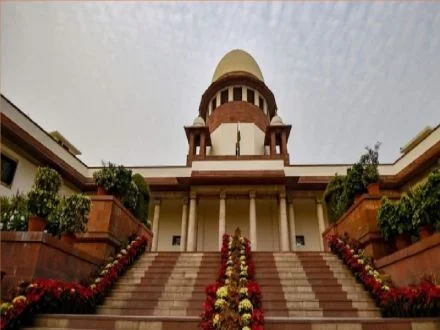
New Delhi: The Supreme Court on Wednesday recognised the Election Commission’s authority to conduct Special Intensive Revision of electoral rolls, observing that the poll body is empowered under the constitutional framework and the Representation of the People Act to undertake such an exercise for ensuring free and fair elections.

The court said the SIR process would continue across the country. It noted that after examining the material on record, the arguments of both sides and the sequence of developments, certain important issues still required detailed consideration.
The matter was heard by a bench of Chief Justice Surya Kant and Justice Joymalya Bagchi. The court had earlier reserved its verdict after hearing petitions that challenged the validity of the SIR process. The petitioners had argued that the exercise went beyond the powers given to the Election Commission under Article 326 of the Constitution, the Representation of the People Act, 1950, and rules framed under it.
The petitioners also claimed that the SIR process had resulted in a large section of poor and displaced voters being denied their right to vote. The challenge had come after the Election Commission started the SIR exercise in Bihar in June last year.
While dealing with the issue, the Supreme Court identified key questions for further examination. It said the first question was whether the Election Commission had the power to carry out a process like SIR. The second issue was whether the verification under SIR was based on a valid objective and whether the measures adopted by the poll body were balanced and proportionate. The third question was whether the procedure followed under SIR conflicted with or violated the provisions of the Representation of the People Act, 1950.
During earlier hearings, the court had also issued interim directions to improve transparency and reduce hardship for voters affected by the SIR process in different states and Union Territories.
The ruling is significant because it directly concerns the preparation and revision of electoral rolls, which form the foundation of India’s election process. For the Election Commission, the order strengthens its position that it can undertake intensive revision when required. For the petitioners, the court’s decision to examine important legal questions in detail keeps the larger debate open.
The case will remain closely watched, as its final outcome may shape how voter list revision exercises are conducted before future elections.
Comments are closed.