

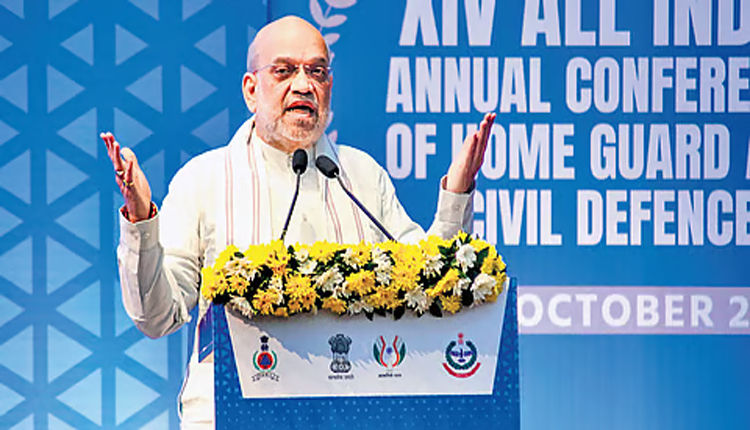
New Delhi: The Centre has constituted a high level committee to examine demographic changes across the country, particularly those linked to illegal immigration and other unusual factors. Union Home Minister Amit Shah announced the formation of the panel, saying demographic shifts caused by infiltration and other reasons pose a serious challenge to India’s present and future.

The committee will be headed by retired Supreme Court judge Justice Prakash Prabhakar Naolekar. Its members include the Census Commissioner, retired IAS officer Durga Shankar Mishra, retired IPS officer Balaji Srivastava and economist Dr Shamika Ravi. The Joint Secretary, Foreigners One, in the Ministry of Home Affairs will serve as the member secretary of the panel.
According to Shah, Prime Minister Narendra Modi had announced the proposed committee during his Independence Day address on August 15, 2025. The Home Minister said the government has now formally constituted the panel to carry out a comprehensive assessment of demographic changes taking place in different parts of India.
Shah described demographic change as an issue linked to sovereignty, national security, law and order, social structure and the protection of tribal communities. The committee has been tasked with studying abnormal population changes at the level of religious and social communities and suggesting a planned and time bound solution.
As per the government’s terms of reference, the panel will scientifically evaluate demographic shifts caused by illegal immigration, cross border activities, economic opportunities, social and environmental factors, abnormal settlement patterns and organised migration. It will also examine structural population changes in areas where local trends differ from broader demographic patterns.
One of the key tasks before the committee will be to recommend a legal, fair and time bound mechanism for identifying, detaining and deporting illegal immigrants already living in the country. It will also suggest steps to strengthen border management, population stabilisation measures and identification systems for continuous monitoring of such trends.
The panel may also propose a broader policy framework to improve coordination between the Centre and states on issues related to illegal immigration and demographic imbalance. The development is expected to generate political debate, especially in border states where migration and changes in population patterns have long remained sensitive issues.
For the government, the committee is being presented as a policy and security measure. Its recommendations may shape future administrative, legal and border management strategies linked to migration, citizenship checks and demographic monitoring.
Comments are closed.