

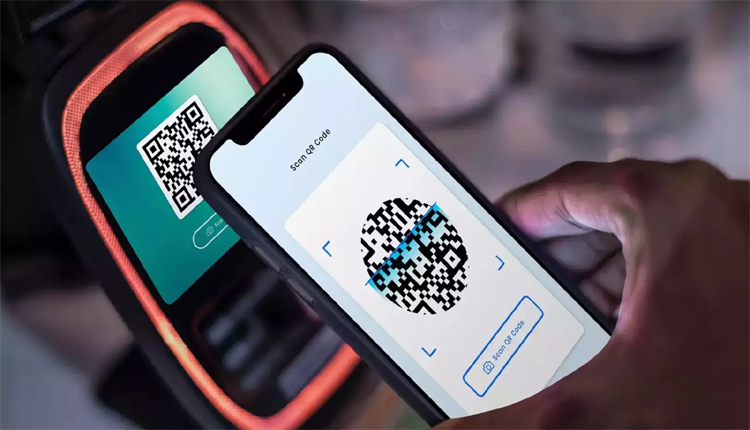
New Delhi: Sparking a nationwide debate, the National Payments Corporation of India (NPCI) recently announced a new framework levying a 0.4 per cent Merchant Discount Rate (MDR) on merchant UPI transactions exceeding Rs 2,000, effective October 15, 2026. While the impending policy has triggered strong protests from trader associations across India, it brings into focus how neighbouring Pakistan regulates fees on its burgeoning digital payment networks.

In India, the Chamber of Trade and Industry (CTI) and various political leaders have vehemently opposed the new MDR guidelines. Critics highlight that routine consumer purchases, such as weekly grocery supplies, frequently cross the Rs 2,000 threshold. They fear this additional financial burden will discourage small-scale merchants from accepting digital payments, potentially driving the retail sector back to a cash-heavy economy and disrupting India’s robust digital ecosystem.
Amidst this socio-political uproar, a comparative look at Pakistan’s digital payment landscape reveals a starkly different approach to transaction fees. Due to long-standing geopolitical tensions, India’s highly successful Unified Payments Interface (UPI) is non-existent in Pakistan. Instead, the State Bank of Pakistan governs its own indigenous digital payment system called ‘Raast’. This government-backed infrastructure interconnects various domestic banks and applications, allowing citizens to seamlessly transfer funds using a Raast ID or a registered mobile number.
Much like Indian platforms such as Paytm or PhonePe, Pakistan relies on popular digital wallets like Easypaisa, JazzCash, SadaPay, UPaisa, and Konnect by HBL to facilitate QR code and mobile-based fund transfers.
Regarding transaction charges, Pakistan also imposes an MDR, but the regulatory framework differs significantly. The State Bank of Pakistan has capped the MDR for merchant payments processed specifically through the ‘RaastP2M’ network at a maximum of 0.25 per cent. To further incentivise the adoption of digital payments, the Pakistani government actively provides a 0.5 per cent subsidy on these transactions. For specific sectors like fuel stations, a flat MDR of 1 Pakistani Rupee (PKR) per litre is applied to card payments.
However, the cost dynamic changes drastically for private financial technologies. Merchants who accept payments via private fintech applications like SadaPay and NayaPay, or through standard credit and debit cards, face hefty MDR charges ranging from 1.5 per cent to 3.5 per cent. Ultimately, while Pakistan manages to keep merchant fees near zero on its state-backed ‘Raast’ QR network through subsidies, the commercial reliance on private digital wallets and cards remains an expensive affair for local businesses.
Comments are closed.