

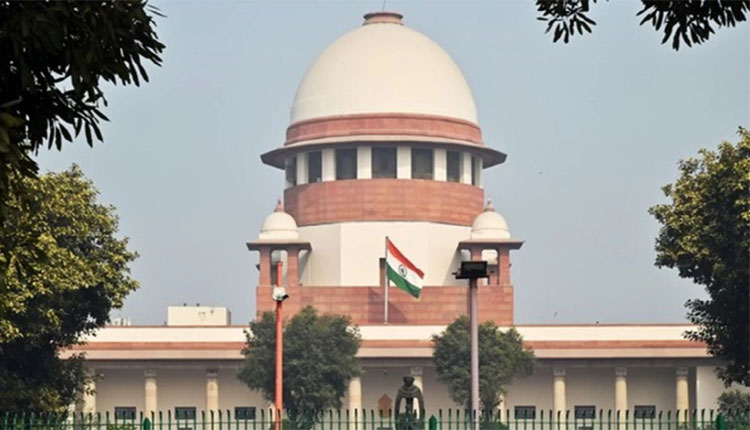
New Delhi: The Supreme Court has cautioned that a stay on a criminal conviction cannot be sought solely to fulfil electoral ambitions or to contest an upcoming election. Making its stance clear, the apex court observed that statutory powers cannot be permitted to operate according to political agendas or electoral calendars.

A bench comprising Justice Dipankar Datta and Justice Sheel Nagu delivered these observations while hearing appeals linked to former Uttar Pradesh minister Azam Khan and his family. The court allowed the appeals filed by Azam Khan’s son, Mohammad Abdullah Azam Khan, and his wife, Dr Tazeen Fatma. Simultaneously, the bench dismissed an appeal by the Uttar Pradesh government that had challenged a High Court order granting a stay on Azam Khan’s conviction.
In its ruling, the bench drew a firm line against using judicial remedies for political expediency. “We completely reject any plea seeking a stay on conviction solely on the grounds of political advantage, electoral ambitions, or the requirements of an upcoming election campaign,” the bench stated. The judges underlined that courts cannot allow legal powers to be invoked simply to further political agendas or electoral aspirations.
While shutting the door on purely political pleas, the Supreme Court also laid out the delicate legal principles governing the suspension of convictions. The bench emphasised that a criminal conviction inflicts immediate and deep harm on an individual’s constitutional right to live with dignity, guaranteed under Article 21 of the Constitution.
Addressing the scope of Section 389(1) of the Code of Criminal Procedure (CrPC), the court noted that judicial discretion to stay a conviction must be exercised with utmost caution. According to the bench, courts are required to carefully weigh two competing factors: the severe, irreversible damage a conviction causes to a person’s reputation and dignity on one hand, and the sanctity attached to a judicial finding of guilt until it is overturned in appeal or revision on the other.
By striking this balance, the top court reiterated that while relief from the harsh consequences of a conviction remains an essential judicial safeguard, it must rest on sound legal grounds rather than the demands of an election cycle.