

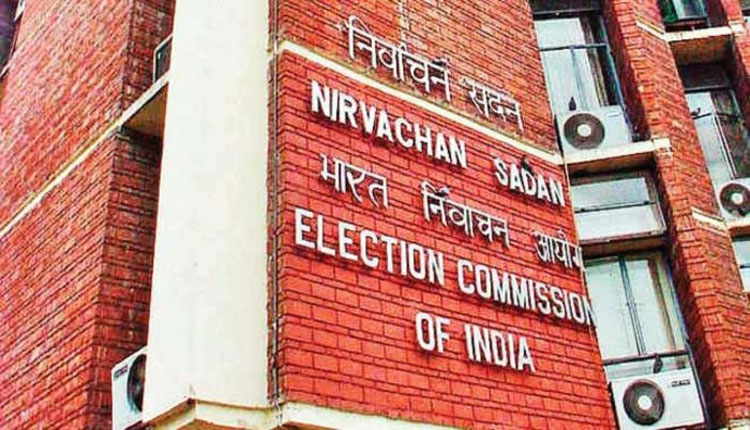
New Delhi: Amid the escalating political row surrounding Chief Election Commissioner (CEC) Gyanesh Kumar, with opposition parties demanding his resignation and even arrest, a spotlight has been cast on the structural framework of the Election Commission of India (ECI). The controversy has sparked widespread public curiosity about the powers, remuneration, and conditions of service for the country’s top poll officers, particularly whether the CEC enjoys a higher salary or greater voting power than the other commissioners.

The short answer is no. Under the Chief Election Commissioner and other Election Commissioners Act, 2023, the CEC and the two other Election Commissioners receive identical compensation and enjoy equal voting rights.
Currently, the salary of the Election Commissioners is equivalent to that of a Supreme Court judge. All three commissioners draw a basic monthly salary of Rs 2.5 lakh. Additionally, they are entitled to identical perks, including dearness allowance, government accommodation, official vehicles, and other standard bureaucratic allowances. Holding the title of ‘Chief’ does not afford the CEC any financial edge.
When it comes to decision-making, the ECI functions as a collective body. The CEC acts as the chairperson of the commission, presiding over meetings, but does not possess veto power. All three commissioners have equal voting rights. Decisions are generally made by consensus; however, in the event of a disagreement, matters are resolved based on a majority vote. A Supreme Court ruling clearly dictates that the CEC does not hold a superior position over the other commissioners when passing orders or making operational decisions.
The only significant disparity between the CEC and the other Election Commissioners lies in the procedure for their removal from office. The CEC enjoys constitutional protection and can only be removed through a stringent impeachment process in Parliament, identical to the procedure used to remove a Supreme Court judge. In contrast, the other Election Commissioners can be removed by the President of India, provided there is a formal recommendation from the CEC.
Regarding their tenure, the rules remain uniform across the board. The CEC and the other Election Commissioners serve for a term of six years or until they reach the age of 65, whichever comes first.
Historically, the ECI functioned as a single-member body from its inception in 1950 until 1989. It was permanently transformed into a three-member panel in October 1993 to ensure a balanced and democratic approach to overseeing the world’s largest electoral exercise.
Comments are closed.