

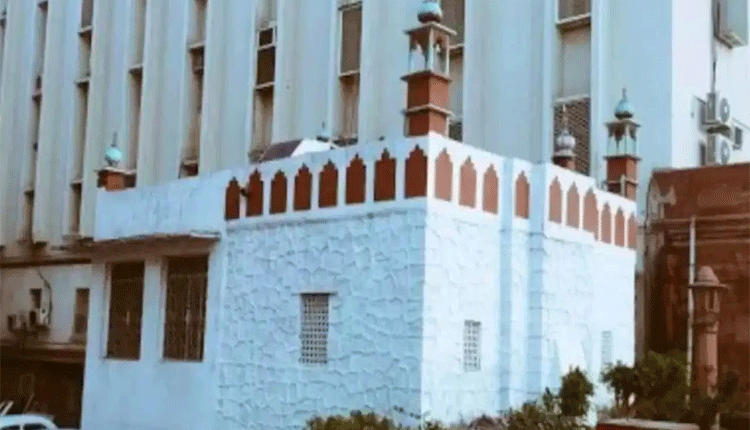
New Delhi: A major controversy has erupted over the ‘Kadimi Mosque’ located within the Krishi Bhawan complex in the national capital, with the Central Government moving to remove the structure under the Central Vista Redevelopment Project. The government argues that maintaining a permanent religious structure inside a government office complex contradicts the secular nature of public property.

However, the mosque’s managing committee strongly opposes the proposed demolition, asserting that the structure predates India’s independence and the construction of the surrounding government offices. The word ‘Kadimi’, derived from Urdu, translates to ‘old’ or ‘ancient’. The committee claims the mosque is over a century old and was officially notified as a Waqf property by the Delhi Waqf Board in 1970.
In its submission to the Delhi High Court, the committee presented documents dating back to 1945. They emphasised that when Krishi Bhawan and neighbouring secretariat buildings like Shastri Bhawan and Udyog Bhawan were constructed between 1956 and 1968, the mosque was already standing. Over the decades, it has served as a place of worship primarily for Muslim employees working in these central government offices.
The Centre, however, relies on an agreement dated November 8, 1940, signed between the then administration and the secretary of the Jama Masjid Management Committee. According to the government, this agreement merely granted permission to use the designated space as a mosque but did not transfer land ownership.
“The agreement did not confer ownership rights to the committee,” the Central Government stated in court, adding that the permission was strictly conditional. The 1940 pact prohibited any structural alterations or new constructions without written government consent, reserving the administration’s right to repossess the land if terms were violated.
The mosque committee has also invoked Article 25 of the Constitution, which guarantees the freedom of religion, pointing out that their rights are being infringed upon.
As the legal battle unfolds in the Delhi High Court, the fate of the Kadimi Mosque hangs in the balance. The case highlights a complex intersection of heritage, religious rights, and modern infrastructure development in the heart of Lutyens’ Delhi.