

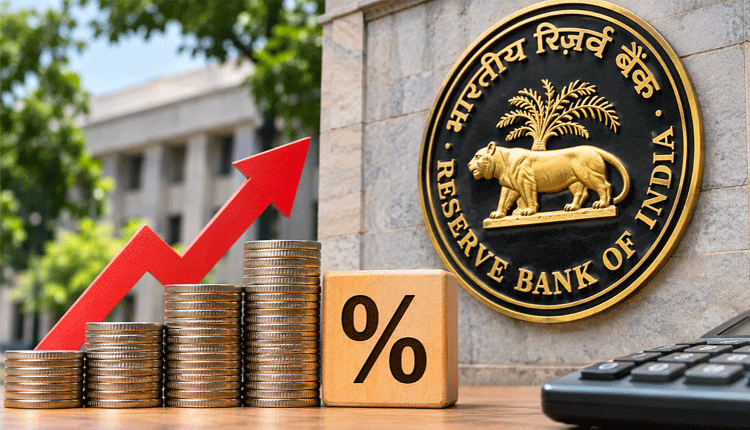
Mumbai: In a crucial assessment ahead of the Reserve Bank of India’s upcoming monetary policy review, economists at the State Bank of India (SBI) have cautioned that an aggressive 50-basis-point (bps) jumbo interest rate hike could provoke serious financial stability risks, trigger capital outflows, and derail economic growth momentum, according to a report by TV9 Hindi.

Citing evolving macroeconomic realities, SBI’s Economic Research Department scaled down its projection for the next policy review, predicting that the Monetary Policy Committee (MPC) will likely opt for a moderate 25 bps hike instead of the earlier anticipated 50 bps increase. SBI economists noted that given current domestic inflation trajectories, a calibrated quarter-percentage-point increase should prove adequate to anchor inflationary expectations without damaging productive economic sectors.
“Amid demands for a large 50 bps rate hike in the December policy review, the RBI must remain extremely vigilant regarding financial stability,” the research note stated. The bank warned that an overtightening shock could lead to counterproductive outcomes, including destabilising foreign portfolio outflows, heightened volatility in the Indian rupee, and an unnecessary brake on GDP expansion.
The MPC, scheduled to deliberate between 2 December and 4 December, had raised the benchmark policy repo rate by 25 bps during its October review—the first rate increase in nearly four years—while shifting its stance from “neutral” to “calibrated tightening”. Following that decision, SBI economists had initially projected a 50 bps hike for December. However, subsequent improvements in external conditions, steady foreign investment inflows, and softening pressure on the domestic currency prompted a downward revision of that forecast.
Globally, the report highlighted that aggressive monetary tightening expectations are cooling, with the US Federal Reserve widely anticipated to keep policy rates unchanged in its December meeting following recent equity market sell-offs and emerging signs of an economic slowdown. Domestically, yields on the 10-year benchmark government security (G-sec) have shown an easing bias, hovering around 4.96 per cent, with SBI projecting yields to potentially soften towards the 4.75 per cent threshold in the near term.