

Patna: In a major push to revive its agrarian economy and attract large-scale industrial investment, the Bihar government has approved the ambitious Bihar Sugar Industry Promotion Policy 2026. Under the newly cleared framework, the state will offer land to investors at a token lease rate of ₹1 and provide capital subsidies of up to ₹100 crore, aiming to establish 25 new sugar mills and revive defunct units across the state.

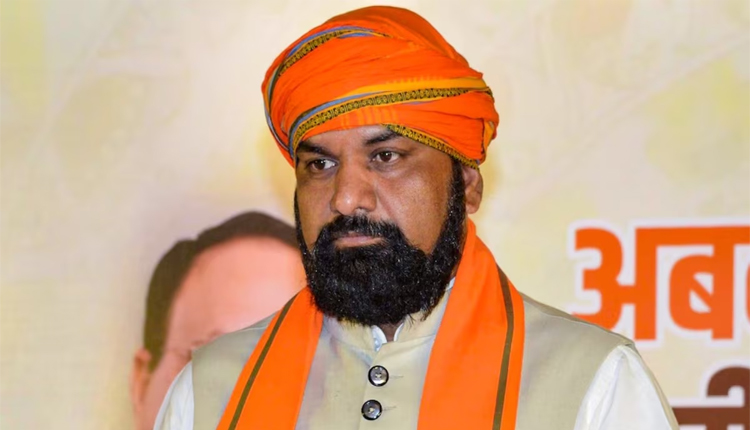
The comprehensive policy was approved during a cabinet meeting chaired by Chief Minister Samrat Choudhary on June 24, 2026. Senior officials claimed this integrated policy is the first of its kind in India, designed around the concept of a “Modern Sugar Complex” to simultaneously boost sugar production, ethanol blending, co-generation of power, and compressed biogas (CBG) projects.
To ease the entry barrier for industrialists, the state government has introduced an aggressive land allocation scheme. Land held by the sugarcane industries department or the Bihar State Sugar Corporation will be provided to eligible investors on a 30-year lease for a token amount of ₹1. The policy caps this specific land allotment at 40 acres per project.
Additionally, the government has promised a 100 percent reimbursement on stamp duty and registration fees for property acquisition. To enhance the fiscal viability of these capital-intensive units, a full reimbursement of the State Goods and Services Tax (SGST) will be provided on the sugar produced for the first five years of operations.
The financial incentive structure is directly tied to the operational capacity of the proposed mills. Industrialists setting up a new plant with a capacity of 5,000 TCD (tonnes of cane crushed per day) will receive a subsidy of up to ₹100 crore distributed over five years. For units with a 3,500 TCD capacity, the state will offer fiscal assistance up to ₹70 crore. Existing mills expanding their capacity by at least 1,000 TCD will be eligible for a ₹15 crore subsidy.
Green energy and modernization are central to the new layout. The policy offers a 15 percent capital subsidy, capped at ₹5 crore, for machinery investments in new or expanding distilleries and ethanol units. To upgrade aging infrastructure, the state will fund 20 percent of the modernization costs, up to ₹5 crore, to transition traditional mills into international-standard refineries.
The state government envisions this policy as part of its larger “Saat Nishchay-3” (Seven Resolves) governance framework. Industry department representatives stated that the multi-pronged strategy will create thousands of rural employment opportunities, offer a sustainable and competitive market for local sugarcane farmers, and reposition Bihar as a frontline destination for green energy and agro-processing in India.
Comments are closed.