

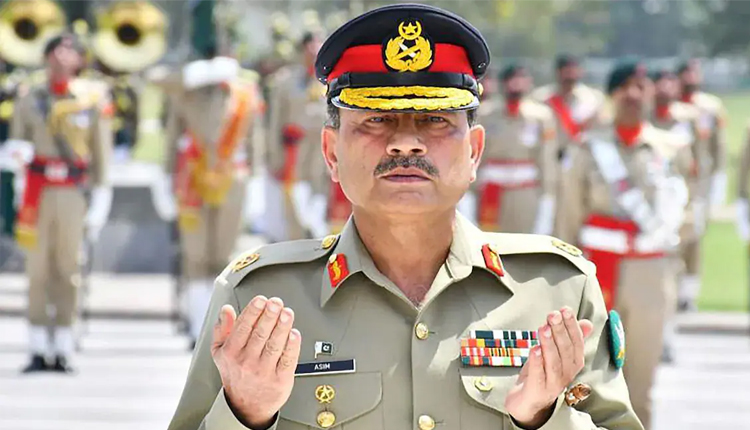
Islamabad: In a dramatic display of shuttle diplomacy, Pakistan’s powerful Army Chief Field Marshal Syed Asim Munir landed in Tehran on Wednesday, carrying a fresh message from Washington as efforts intensify to revive stalled US-Iran peace talks.

The high-level delegation, which also includes Interior Minister Mohsin Naqvi, arrived in the Iranian capital just days after the first round of direct negotiations between the US and Iran ended without a breakthrough in Islamabad. Those marathon talks, hosted by Pakistan last week, had raised hopes of ending the recent US-Israel conflict with Iran, but both sides walked away with significant gaps still remaining.
Pakistani officials say Munir’s visit is part of ongoing mediation to “narrow the differences” and pave the way for a possible second round of talks, which US President Donald Trump has hinted could again be held in Islamabad. Trump recently praised Munir as a “great guy” doing a “fantastic” job, crediting him for helping secure the initial ceasefire and keeping the dialogue alive.
Upon arrival, Munir was warmly received by Iranian Foreign Minister Abbas Araghchi. Images of the army chief saluting and sharing a tight hug with the Iranian side quickly went viral, underlining Pakistan’s delicate balancing act between its traditional Western ties and close neighbourhood relations with Tehran.
For Islamabad, the stakes are high. A prolonged conflict next door risks refugee flows, sectarian tensions, fuel disruptions and economic shocks for a country already battling multiple crises. By positioning itself as a trusted bridge, Pakistan — and especially its army chief — has suddenly found itself at the centre of one of the world’s most sensitive diplomatic theatres.
Whether Munir can deliver the breakthrough remains to be seen, but one thing is clear: the man in khaki is quietly becoming Pakistan’s most influential voice on the global stage.
Comments are closed.