

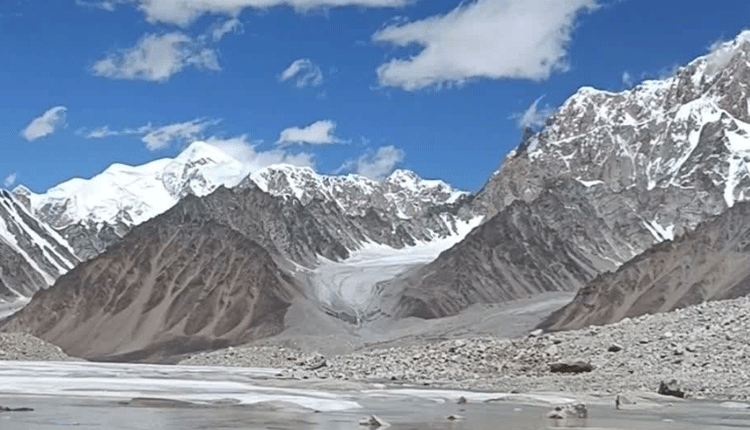
New Delhi: A ticking “time bomb” looms over India’s hill towns as Glacial Lake Outburst Floods (GLOF) threaten the safety of nearly three crore residents. According to a recent assessment, out of 28,043 glacial lakes across the Himalayan region, 188 have been classified as highly vulnerable to bursting.

GLOF events occur when natural dams—composed of moraine or ice—fail to contain the swelling waters of rapidly melting glaciers, sending lethal torrents of debris and boulders downstream. This looming danger is particularly acute in Sikkim and Arunachal Pradesh, which together harbour 129 of these high-risk lakes, alongside several critical zones in Ladakh, Kashmir, and Uttarakhand.
In Himachal Pradesh, the Ghepan Lake in Lahaul-Spiti, situated at an altitude of 4,070 metres, presents a chilling scenario. Administrative estimates suggest that in the event of an outburst, catastrophic floodwaters could reach downstream settlements in merely five minutes, putting major tourist hubs like Manali squarely in the danger zone.
Despite ranking third globally in the sheer number of GLOF occurrences, India tragically records the highest number of related fatalities. Data indicates that 62 historical incidents in India have claimed 6,119 lives, a staggering toll when compared to neighbouring China (199 incidents, 625 deaths) and Pakistan (152 incidents, 1,991 deaths). This alarming disparity underscores severe shortcomings in the country’s disaster preparedness and early warning infrastructure. Analysts note a failure to internalise lessons from recent disasters, including the 2023 Sikkim tragedy and the 2025 Chamoli event.
Experts attribute this escalating threat to a deadly combination of climate change and haphazard infrastructure development within fragile ecosystems. Rising temperatures accelerate glacier melt, expanding the lakes, while unchecked mountain construction magnifies the potential devastation. Furthermore, establishing robust Early Warning Systems (EWS) remains challenging due to poor network connectivity in remote, high-altitude terrain, making sensor deployment and real-time data transmission exceedingly difficult.
Addressing this existential threat requires immediate, comprehensive intervention. Authorities stress that averting future catastrophes demands continuous scientific monitoring, stringent construction regulations, and swift evacuation protocols, warning that continued complacency could result in the complete erasure of vulnerable hill communities.