

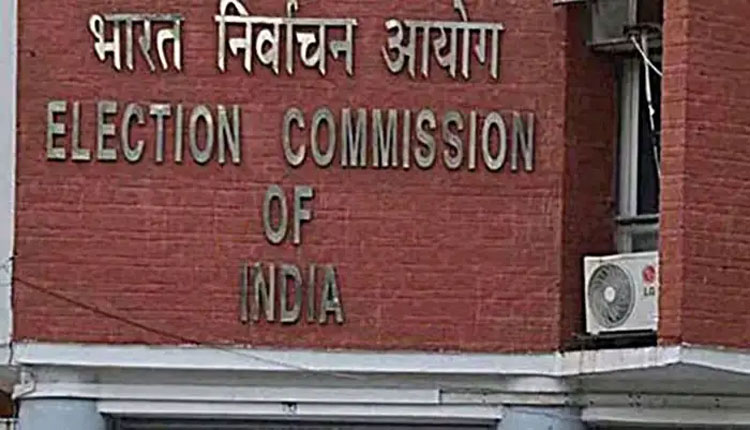
New Delhi: In a significant development amid the ongoing political debate surrounding the Special Intensive Revision (SIR) process, the Election Commission of India (EC) has officially extended the deadline for releasing the final electoral rolls in six states. The decision comes on the heels of the Supreme Court raising questions about the Delhi SIR process during a recent hearing concerning Form-6.

The Election Commission announced that the time limit for submitting claims and raising objections under the SIR process has been extended, thereby pushing back the final publication dates of the voter lists. According to the revised schedule, the final electoral rolls for Haryana, Telangana, Nagaland, Andhra Pradesh, and Maharashtra will now be released on November 30.
For the national capital, Delhi, the final draft of the voter list is scheduled to be published a bit earlier, on November 22.
The extension is seen as a crucial step, particularly in light of the ongoing controversies directed at Chief Election Commissioner Gyanesh Kumar regarding the execution of the SIR process. The SIR aims to cleanse and update the electoral rolls by adding new eligible voters and deleting duplicate or deceased entries. However, several opposition parties and leaders have expressed concerns over mass deletions and the potential disenfranchisement of legitimate voters.
By extending the deadline, the Election Commission aims to provide political parties, citizens, and civil society organisations with additional time to scrutinise the draft lists, submit necessary claims, and register their objections comprehensively. The extension addresses the Supreme Court’s recent observations regarding the complexities and potential discrepancies involving Form-6, which is used for the inclusion of names in the electoral roll.
The revised timeline ensures that the Election Commission can systematically address the incoming objections, maintaining the integrity and accuracy of the democratic process before finalising the crucial voter databases for these six key regions.