

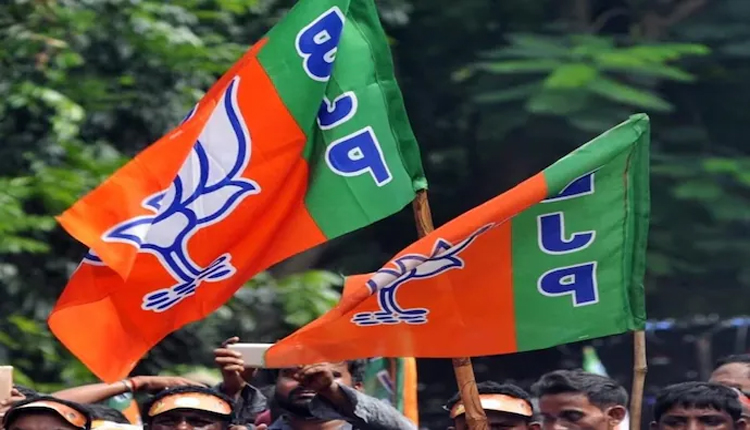
New Delhi: As the Bharatiya Janata Party continues its massive dominance in Indian politics, its remarkable electoral success is often credited to its highly disciplined and meticulously planned organizational framework. Functioning as a colossal cadre based political machine, the party hierarchy operates seamlessly from the highest decision making bodies in New Delhi right down to the grassroots booth level workers across the nation.

At the very top of this political pyramid sits the National President, who serves as the highest authority within the party. The president is officially elected by an electoral college comprising members of the National and State Councils. Working closely alongside the president is the National Executive, a powerful presidium that sets the strategic direction, develops core policies, and oversees internal party elections. For crucial day to day decisions, the party relies on the Parliamentary Board, an elite governing body consisting of top senior leaders. Furthermore, the Central Election Committee holds the critical responsibility of finalizing candidates for all parliamentary and legislative elections.
The structure mirrors itself at the state level to ensure smooth regional functioning. A State President leads the State Executive Committee, maintaining direct coordination with the central leadership while efficiently managing local political affairs. Below the state unit, the organizational chain branches into District Committees, which play a pivotal role in implementing party strategies and mobilizing public support within their respective jurisdictions.
Moving deeper into the grassroots, the structure divides into Mandal Committees. Each Mandal operates with a president, general secretaries, and other office bearers who oversee political activities at the block level. To bridge the gap between Mandals and the lowest tier, the party utilizes ‘Shakti Kendras’. A Shakti Kendra acts as a cluster point, actively managing and monitoring a specific group of four to five polling booths.
The true foundation of the party’s massive electoral machinery lies at the very bottom: the Booth Level Committees. Often referred to as the absolute backbone of the organization, the booth workers and ‘Panna Pramukhs’ (voter list page incharges) are directly responsible for interacting with the voters, resolving local issues, and ensuring maximum voter turnout on election day. Prime Minister Narendra Modi and top party leaders frequently emphasize that the core identity of a booth committee must be defined by continuous public service.
This tight, uninterrupted chain of command from the national headquarters down to a single polling booth enables the ruling party to quickly disseminate information, execute massive political campaigns, and deeply connect with the masses.
Comments are closed.