

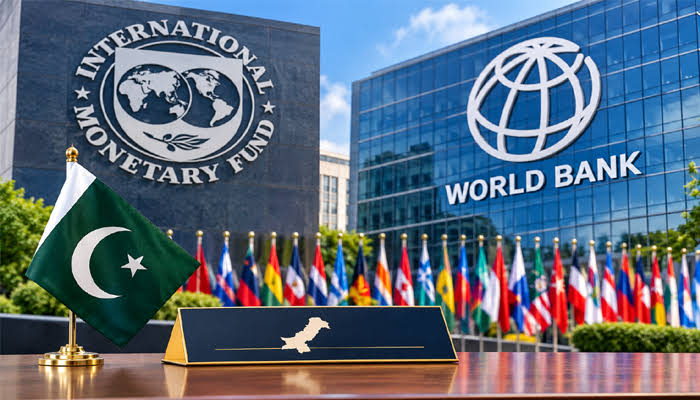
Islamabad: In a significant diplomatic development, Pakistan has been selected to chair the Boards of Governors of the International Monetary Fund (IMF) and the World Bank Group for the year 2027. The announcement, which marks the country’s return to this global role after a gap of 74 years, was made during the 2026 IMF-World Bank Annual Meetings currently underway in Bangkok, Thailand.

Pakistan’s Federal Minister for Economic Affairs, Ahad Khan Cheema, who also serves as the country’s World Bank Governor, was officially designated as the incoming chair. The last time Pakistan held this position was in 1953, when the then Finance and Economic Affairs Minister, Mohamad Ali, presided over the annual meetings in Washington.
The Ministry of Economic Affairs hailed the appointment as a “historic milestone” for the nation. According to the ministry, assuming the chairmanship will provide Pakistan with a unique platform to contribute effectively to global economic and development discourse while fostering stronger cooperation among member countries.
Following the plenary session in Bangkok, Cheema held a transition meeting with the outgoing chair, Paraguayan central bank chief Carlos Carvallo Spalding, to discuss institutional coordination and responsibilities for the upcoming term. Cheema subsequently outlined four primary priorities for Pakistan’s chairmanship: amplifying the voice of developing nations in global financial forums, ensuring that development finance becomes more predictable and effective, enhancing coordination across multilateral development institutions, and mobilising private investments to drive sustainable growth.
While the chairmanship is primarily procedural and diplomatic—bringing no direct authority over the lending decisions of the financial institutions—it offers a notable image boost for Islamabad on the international stage.
Ironically, the appointment comes at a time when Pakistan remains heavily dependent on international financial assistance to stay afloat. The country is currently navigating a severe economic crisis through multiple bailout programmes. These include a crucial $7 billion Extended Fund Facility (EFF) aimed at meeting immediate balance of payment needs and implementing structural reforms, alongside a $1.4 billion Resilience and Sustainability Facility (RSF) designed to address climate-related risks. Furthermore, recent staff-level agreements could potentially unlock an additional $1.2 billion in IMF funding for the struggling South Asian economy, subject to final executive board approval.