

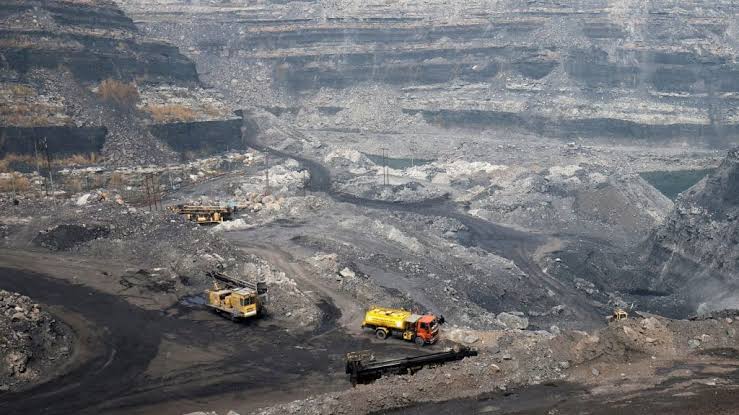
New Delhi: In a significant legislative move that impacts the fiscal powers of states, Parliament has cleared the Mines and Minerals Development and Regulation Amendment Bill 2026. The legislation, which now awaits presidential assent, essentially invalidates a recent Supreme Court verdict that permitted state governments to levy independent taxes on mineral rights and mineral bearing lands.

The new law introduces Section 9D to the MMDR Act 1957. According to this provision, state governments will now only be able to impose taxes or cesses on mineral rights under the strict conditions and limitations defined by the central government. Furthermore, any uncollected past tax demands issued by states have been declared null and void from the beginning. This provides a major relief to mining companies regarding old dues. The government clarified however that any taxes already collected by the states will not have to be refunded.
This legislative development directly counters a landmark 2024 judgment by a nine judge Constitution Bench of the Supreme Court, headed by then Chief Justice DY Chandrachud. The apex court had distinctly differentiated between royalty and tax, ruling that states possessed the constitutional authority to impose taxes on mineral resources since they bear the primary environmental and infrastructural impact of mining operations.
Defending the bill, Union Minister for Coal and Mines G Kishan Reddy stated that the core objective is to boost the production of major minerals. He highlighted that the revenue share of states from the mining sector has already surged from sixty five percent to eighty five percent due to recent reforms under the leadership of Prime Minister Narendra Modi. The central government argued that unpredictable and varying tax rates imposed by different states create financial uncertainty, drive up production and transportation costs, and ultimately burden the common consumer.
The legislation has sparked fierce protests from the opposition and leaders of mineral rich states. Aam Aadmi Party Member of Parliament Sanjay Singh accused the Centre of usurping the economic rights of states and centralizing control over natural resources. Echoing similar concerns, Jharkhand Chief Minister Hemant Soren wrote to the President and the Prime Minister, calling the move an attack on the federal structure and tribal rights. He pointed out that Jharkhand relies on mining for eighty four percent of its revenue, and losing this taxation power would severely affect state welfare schemes.
With both houses of Parliament giving their nod, the bill marks a critical shift in the management of natural resources, centralizing regulatory authority to ensure uniform development while triggering an intense debate on fiscal federalism.
Comments are closed.