

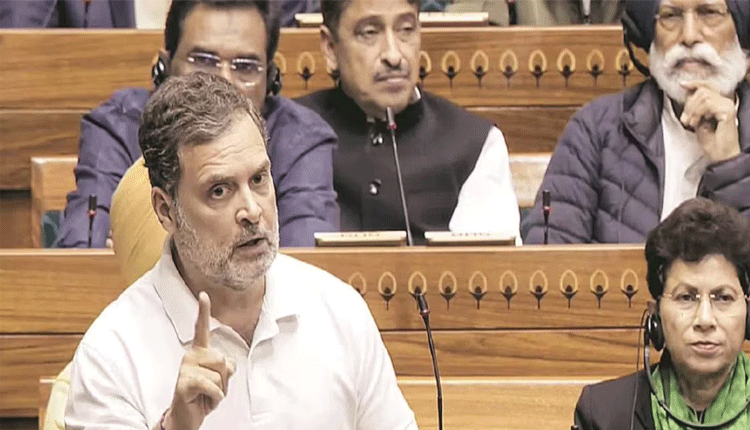
New Delhi: A massive political row erupted in the Lok Sabha during the debate on the Anti Paper Leak Bill after Leader of Opposition Rahul Gandhi claimed that ministers are mere figureheads and the real power lies with the Officer on Special Duty (OSD). Gandhi alleged that the education ministry was run by the RSS through an OSD sitting in the minister’s office, calling former Education Minister Dharmendra Pradhan’s resignation a mere facade.

The ruling party strongly objected to these allegations, demanding evidence and sparking chaos in the lower house. The controversy has shifted the spotlight to the role, appointment process, and actual powers of an OSD in government ministries.
An OSD is a temporary, non cadre post created for specific tasks, policies, or responsibilities in the offices of ministers or chief ministers. The practice dates back to British rule and remains common today. While there is no direct recruitment exam for this role, OSDs are usually serving officers from services like IAS, IPS, or IRS brought in on deputation. In many cases, they are trusted political aides or subject experts chosen by the minister.
According to a Department of Personnel and Training memorandum from August 2010, appointing an OSD at the Deputy Secretary level or above in a minister’s personal staff requires prior approval from the Appointments Committee of the Cabinet. This ensures that the appointment follows strict administrative protocols and is not just at the minister’s discretion.
The primary role of an OSD is to act as a strategic advisor, coordinate with senior bureaucrats, and manage policy inputs. Unlike a Personal Assistant who handles daily operations or a Private Secretary who manages administrative tasks, an OSD works closely on policy making. However, they lack the constitutional authority to issue formal government orders. The final decision making power rests solely with the minister and the departmental secretary.
While the ruling party dismissed Gandhi’s claims as baseless political rhetoric, administrative experts note that a trusted OSD often holds immense informal influence over a minister’s decisions. This dynamic frequently places the position at the centre of political debates.
Comments are closed.