

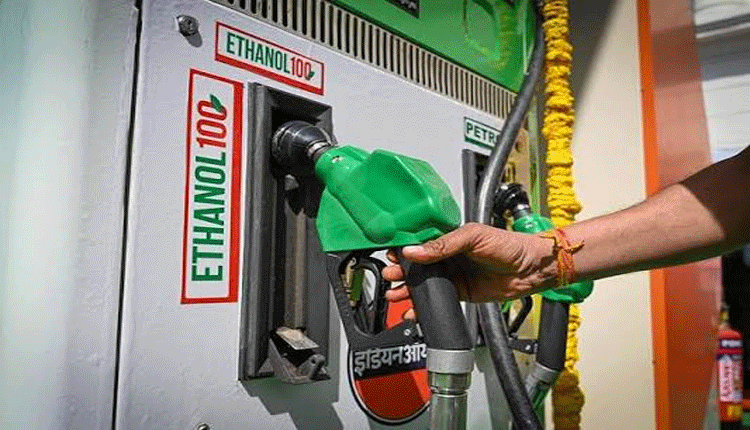
New Delhi: A massive nationwide debate over E20 petrol has recently sparked across India following widespread complaints regarding reduced vehicle mileage. While several digital content creators claim that the new twenty percent ethanol blend negatively impacts engine performance, the central government and major oil companies have strongly dismissed these allegations. However, India is certainly not the first nation to adopt this green energy transition. A closer look at global practices reveals that several countries from Brazil to Japan have successfully integrated ethanol mixed fuel into their daily transport systems.

The primary goal behind blending agricultural ethanol with conventional petrol is to significantly reduce heavy dependence on expensive crude oil imports. This eco friendly initiative also aims to control vehicular emissions and directly boost the financial income of farming communities. India is currently pushing forward with its E20 mandate across all major cities and has set an ambitious official target to achieve an E30 blending ratio by the year 2030.
Looking at the global landscape, Brazil remains the undisputed leader in ethanol adoption. The South American nation currently uses a standard E30 blend, which contains thirty percent ethanol mixed with regular fuel. Furthermore, numerous flexible fuel vehicles in Brazil operate entirely on pure E100 ethanol. Meanwhile, the United States primarily relies on the E10 fuel model, though certain progressive states have made the E15 blend readily available for public consumption. Similarly, the E10 petrol standard has become quite common and widely accepted across several countries within the European Union.
Neighboring nations and other developed economies are also actively participating in this green fuel movement. Nepal has already successfully implemented the E10 petrol standard for its citizens. In North America, Canadian provinces follow varying environmental regulations, offering ethanol blends ranging from five percent to twelve percent based on specific regional laws. On the other hand, Japan is currently in the early stages of exploring and adopting ethanol blending policies, closely monitoring the developments witnessed in countries like India.
Energy experts emphasize that transitioning to ethanol blended fuels is a crucial step for achieving national energy security and sustainable development. While public adaptation and technical apprehensions remain a temporary hurdle in the Indian market, the highly successful global models clearly indicate that ethanol blending is a practical and long lasting solution for the future of the automotive sector.
Comments are closed.