

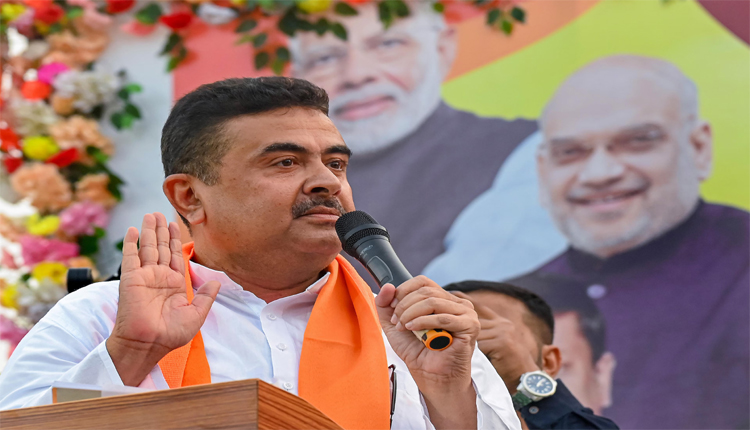
Kolkata: In a major legislative development, the recently elected Bharatiya Janata Party (BJP) administration in West Bengal is all set to introduce the Uniform Civil Code (UCC) Bill on the floor of the State Assembly on Monday, June 29, 2026. This fast-tracked policy implementation fulfills a crucial pre-poll commitment well ahead of the party’s initial six-month deadline.

The decision to introduce the bill was finalized during a Business Advisory Committee meeting convened by Speaker Rathindra Bose within the Assembly premises. If passed, West Bengal will become the fourth state in the country to adopt a common civil code after Uttarakhand, Gujarat, and Assam, systematically replacing existing religion-based personal laws with a unified legal structure applicable to all citizens in civil matters.
State cabinet sources indicated that the draft legislation drawing from frameworks in other BJP-ruled states will enforce strict statutory gender parity regarding ancestral property rights, institute a comprehensive ban on polygamy and child marriage, and mandate the formal registration of live-in relationships. Chief Minister Suvendu Adhikari, alongside Leader of the Opposition Ritabrata Banerjee, are scheduled to lead the parliamentary debate on the floor of the House.
The swift legislative action comes less than two months after the BJP formed its historic first government in the state, having secured 208 seats in the 293-member House to defeat the Trinamool Congress’s (TMC) 15-year tenure. The introduction of the UCC aligns with the high-octane campaign pledges made by Union Home Minister Amit Shah, who had vowed to wipe out custom-sanctioned appeasement through uniform laws.
Alongside the UCC, the Adhikari administration will simultaneously table two critical public safety bills aimed at checking organized crime and political vandalism. This includes a new draft legislation titled “The West Bengal Public Safety & Control of Anti-Social Activities Bill, 2026,” which introduces provisions for one-year preventive detention for anti-social elements and empowers state authorities to liquidate personal assets of convicts to compensate for damages to public property.
While treasury benches assert that the uniform civil structure is necessary to ensure equality before the law and protect women’s rights, opposition benches, including the Trinamool Congress, are expected to heavily oppose the move. Critics have historically maintained that replacing personal laws infringes upon the religious freedom and constitutional protections granted to minoritarian socio-cultural communities.
Comments are closed.