

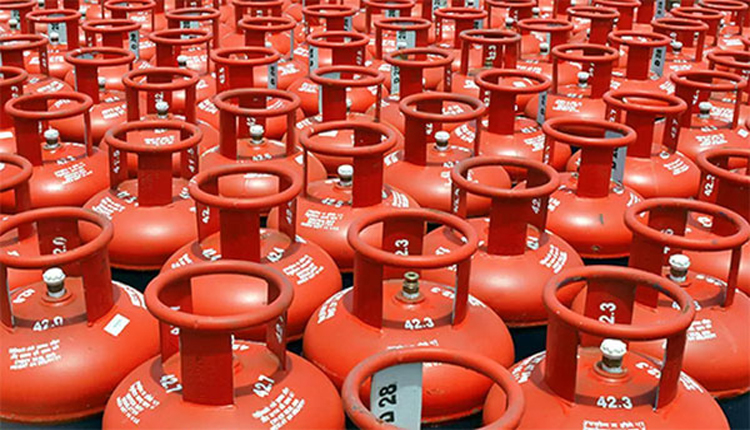
New Delhi: The Centre’s latest decision on LPG subsidy under the Pradhan Mantri Ujjwala Yojana is set to directly impact millions of poor households that depend on cooking gas support. As per the new subsidy structure, Ujjwala beneficiaries will receive a subsidy of Rs 300 per cylinder on the first four LPG refills in a year.

The move comes at a time when cooking gas prices have again become a major household concern. According to reports, the number of subsidised cylinders available annually under the Ujjwala scheme has been reduced from nine to four. The government has said the decision is linked to average consumption patterns among Ujjwala households.
Under the revised arrangement, eligible beneficiaries will continue to get the subsidy amount directly in their bank accounts after purchasing LPG refills. The support of Rs 300 applies to a 14.2 kg LPG cylinder. For 5 kg cylinders, the benefit will be calculated proportionately.
The Ujjwala scheme was launched in May 2016 with the aim of providing deposit free LPG connections to women from poor households. The purpose was to reduce dependence on traditional cooking fuels such as firewood and improve health conditions, especially for women and children exposed to kitchen smoke.
Earlier, the government had approved a targeted subsidy of Rs 300 per 14.2 kg cylinder for up to nine refills in a year during financial year 2025 to 26. The subsidy provision was meant to protect poor families from sharp fluctuations in international LPG prices and ensure continued use of clean cooking fuel.
The latest change has raised practical questions for beneficiary families. For the first four cylinders, the subsidy will be credited as per the existing direct benefit transfer system. However, once the limit is exhausted, households may have to bear the full market price for further refills unless any additional relief is announced.
The issue is important because LPG remains a basic household need. Any increase in the effective cost can affect monthly budgets, particularly in rural and low income families.
For the government, the decision is being presented as an effort to align subsidy support with actual consumption. For beneficiaries, however, the real test will be affordability after the fourth refill.
The coming months will show whether the revised subsidy structure can balance fiscal pressure with the original promise of Ujjwala, which was to make clean cooking fuel accessible and affordable for India’s poorest households.
Comments are closed.