

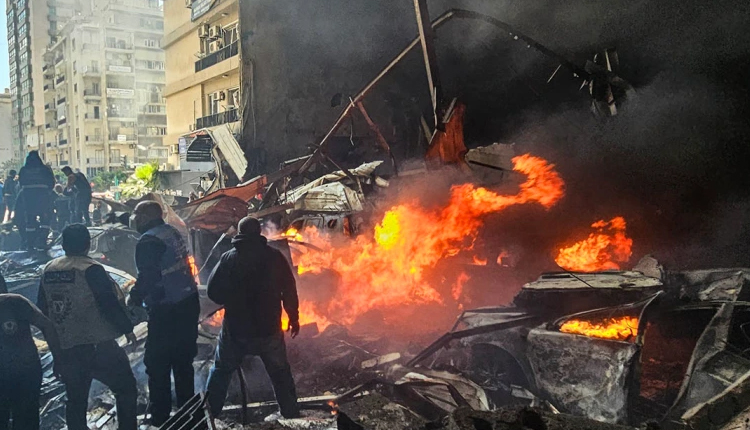
Beirut: Israel has carried out a major airstrike on the southern suburbs of Lebanon’s capital Beirut, targeting what it described as Hezbollah command and operational facilities. The attack marks the first major strike on the Beirut area since a ceasefire brokered with significant United States involvement came into effect earlier this month, raising fresh concerns about the stability of the fragile truce.

According to Israeli Prime Minister Benjamin Netanyahu and Defence Minister Israel Katz, the operation targeted what Israeli authorities termed “terrorist headquarters” belonging to Hezbollah in the Dahiyeh district, a known stronghold of the Iran backed group. Israeli officials said the strike was launched in response to recent missile and rocket attacks originating from Lebanon and directed at northern Israel.
Lebanese authorities reported casualties following the attack, with at least two people killed and several others injured. The strike triggered panic in parts of Beirut’s southern suburbs, prompting residents to flee affected areas amid fears of a wider escalation. Emergency teams were deployed to the site as rescue operations continued.
The attack comes just days after a US backed ceasefire arrangement aimed at reducing hostilities between Israel and Hezbollah. Under the understanding reached through diplomatic efforts, both sides were expected to scale back military operations and work toward broader de escalation. However, tensions have remained high, with repeated accusations of ceasefire violations from both sides.
Hezbollah has not immediately confirmed the Israeli allegations regarding recent attacks on northern Israel. However, the group has consistently maintained that it will continue resisting Israeli military operations in Lebanon until Israeli forces withdraw from occupied areas and airstrikes cease completely.
The latest strike has also heightened regional concerns, particularly after Iran warned that attacks on Beirut could lead to a stronger response and further destabilise the region. Analysts fear the escalation could undermine ongoing diplomatic efforts involving the United States, Lebanon, Israel and regional stakeholders seeking to prevent a broader conflict in West Asia.
The conflict between Israel and Hezbollah has intensified significantly in recent months, resulting in thousands of casualties and large scale displacement in Lebanon. While international mediators have pushed for a lasting ceasefire, recurring military exchanges continue to threaten peace efforts.
Comments are closed.