

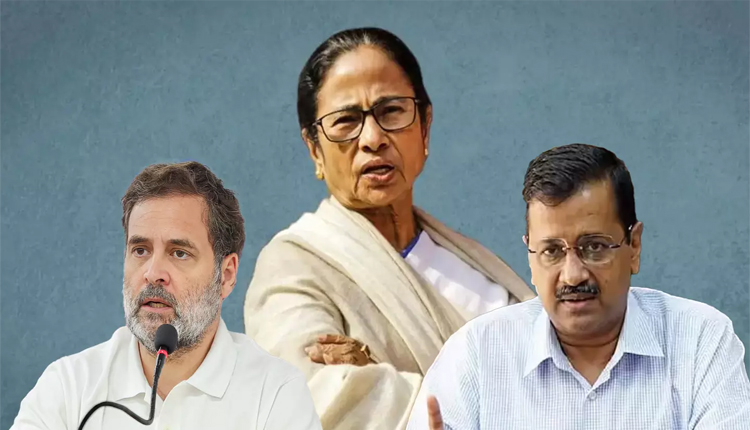
New Delhi: Janata Dal (United) working president and Rajya Sabha MP Sanjay Kumar Jha has blamed West Bengal Chief Minister Mamata Banerjee and Aam Aadmi Party national convenor Arvind Kejriwal for the collapse of the INDIA alliance, claiming that both leaders prioritised their individual political interests over opposition unity. His remarks come ahead of a crucial meeting of opposition parties aimed at reviving coordination against the BJP led National Democratic Alliance (NDA).

Speaking on the evolving political landscape, Jha said the opposition bloc failed to remain united because several key leaders chose independent political strategies instead of working collectively. According to him, Mamata Banerjee and Arvind Kejriwal played a significant role in weakening the alliance by refusing to cooperate on critical electoral and organisational issues.
The INDIA alliance was formed in 2023 as a broad coalition of opposition parties with the objective of challenging the BJP at the national level. However, differences over seat sharing arrangements, leadership questions and state specific political rivalries repeatedly created friction among constituent parties.
Jha’s comments come at a time when opposition leaders are attempting to regroup following a series of electoral setbacks in different states. A meeting of opposition parties has been convened in New Delhi, where leaders are expected to discuss inflation, rising fuel prices, unemployment and other issues they intend to raise against the Centre. Reports indicate that representatives from more than 20 opposition parties are likely to participate in the discussions.
The JD(U) leader argued that a strong opposition requires discipline and a shared political vision. He suggested that the inability of alliance partners to maintain a united front ultimately undermined the coalition’s effectiveness. His remarks have added a new dimension to the ongoing debate over the future of opposition politics in India.
Neither the Trinamool Congress nor the Aam Aadmi Party had issued an immediate response to Jha’s allegations at the time of reporting. Both parties, however, have previously defended their political decisions, arguing that regional realities often require independent electoral strategies.
Political analysts believe the latest statement reflects continuing tensions within opposition ranks even as parties attempt to rebuild cooperation. The challenge for opposition leaders will be balancing regional ambitions with the broader goal of presenting a united political alternative at the national level.
Comments are closed.