

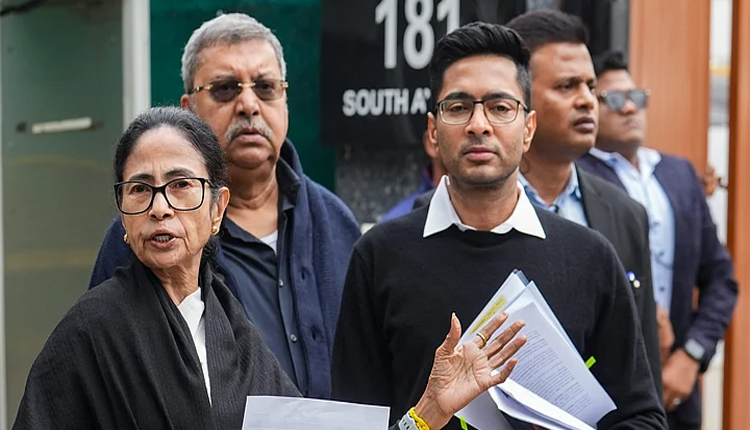
New Delhi/Kolkata: The political crisis within the Trinamool Congress (TMC) appears to be deepening, with fresh reports suggesting that a section of the party’s Members of Parliament may be considering the formation of a separate parliamentary faction. The development, if it materialises, could deal another major setback to party chief Mamata Banerjee, who is already grappling with a rebellion among legislators following the party’s defeat in the West Bengal Assembly elections.

According to sources familiar with the developments, dissatisfaction within the TMC is no longer confined to the state unit. Concerns are reportedly growing among some MPs over the party’s future direction, leadership structure and strategy following the electoral setback. These developments have fuelled speculation that a group of parliamentarians may explore options outside the existing organisational framework.
The unrest comes at a time when the TMC is facing one of the most challenging phases in its political history. After suffering a major setback in the Assembly elections, the party has witnessed public disagreements, resignations and open dissent from several leaders. The emergence of a rebel camp among MLAs has already weakened the organisation’s unity and raised questions about its internal cohesion.
Political observers note that the possibility of unrest spreading to the parliamentary wing could have wider implications. The TMC remains one of the largest opposition parties in Parliament and plays a significant role within the INDIA bloc. Any division among its MPs could affect the party’s influence in national politics and alter opposition dynamics in the months ahead.
Amid growing speculation, TMC National General Secretary Abhishek Banerjee reportedly rushed to New Delhi to hold consultations with party MPs and senior leaders. His visit is being viewed as an effort to assess the situation, address grievances and prevent any further erosion of support within the parliamentary ranks.
The party leadership has not officially confirmed reports regarding the formation of a separate faction. However, recent developments have intensified concerns among TMC supporters about the possibility of a larger organisational split. Mamata Banerjee has repeatedly maintained that the party remains united and has dismissed attempts to portray the situation as a major crisis.
In recent weeks, the TMC leadership dissolved several organisational committees and initiated a restructuring exercise aimed at reconnecting with grassroots workers and rebuilding the organisation after the election setback. Party leaders have described the move as part of a broader strategy to strengthen the party rather than a response to internal rebellion.
Political analysts believe the coming days will be crucial. If the leadership succeeds in addressing concerns within both the legislative and parliamentary wings, the party may be able to contain the crisis. However, if dissatisfaction continues to grow, the TMC could face one of the most significant organisational challenges since its formation.
For now, all eyes remain on New Delhi and Kolkata, where behind the scenes negotiations and consultations are expected to shape the future course of West Bengal’s principal opposition force at the national level.
Comments are closed.