

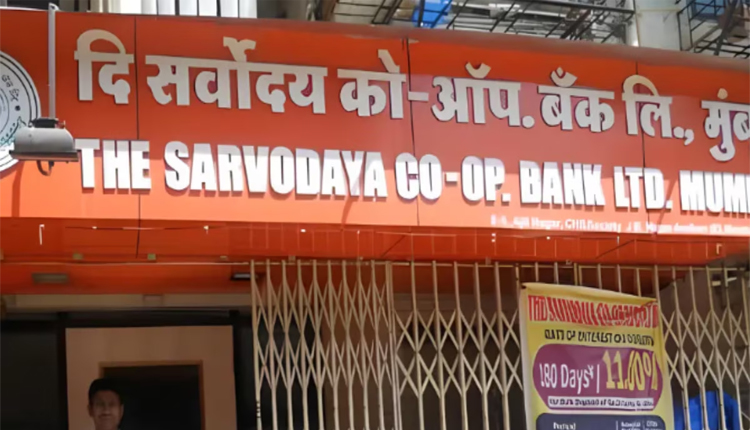
Mumbai: The Reserve Bank of India (RBI) on Tuesday cancelled the licence of Mumbai-based Sarvodaya Co-operative Bank, citing weak financial health, inadequate capital and failure to comply with several regulatory norms under the Banking Regulation Act. The bank has been directed to stop all banking operations with effect from May 12, 2026.

In an official statement, the RBI said the co-operative bank did not have sufficient capital or earning prospects to continue operations safely. The central bank also observed that allowing the lender to function further would adversely affect public interest and put depositors at risk.
Following the cancellation of the licence, the bank has been barred from carrying out any banking activity, including accepting fresh deposits or repaying existing deposits. The RBI has also requested the Maharashtra Commissioner for Co-operation and Registrar of Co-operative Societies to initiate the bank’s liquidation process and appoint a liquidator.
However, the RBI said depositors would receive protection under the Deposit Insurance and Credit Guarantee Corporation (DICGC) scheme. Eligible customers can claim deposit insurance of up to ₹5 lakh. According to RBI data, nearly 98.36 per cent of depositors are expected to receive their entire insured deposit amount. ()
The RBI further revealed that the DICGC had already disbursed around ₹26.72 crore towards insured deposits till March 31, 2026.
The action once again highlights the growing regulatory scrutiny on financially stressed co-operative banks across the country, with the RBI tightening oversight to protect depositors and maintain confidence in the banking system. (
Comments are closed.