

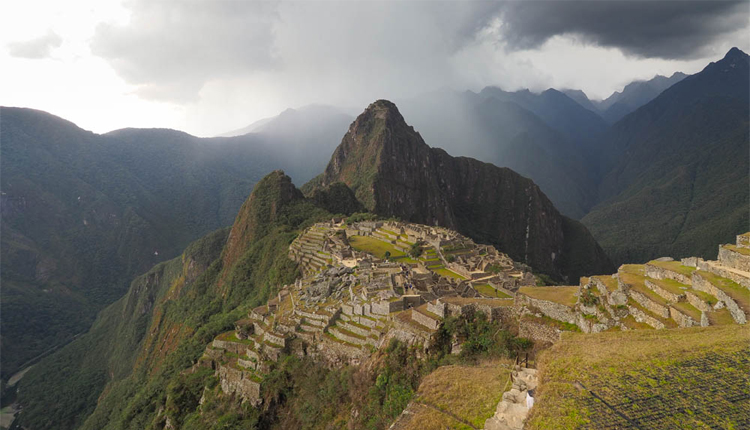
Cusco, Peru: The enigmatic lost city of Machu Picchu, perched high in the Andes, continues to captivate the world, but recent research has unravelled many of its long-standing mysteries.

Built by the Inca Empire in the 15th century, this UNESCO World Heritage site was not, as once believed, a lost capital or a fortress against invaders.
Experts now agree that Machu Picchu served primarily as a royal estate and luxurious retreat for the Inca emperor Pachacuti, the founder of the Inca Empire’s golden age. Constructed around 1450 CE, the site showcased the empire’s engineering brilliance with its precisely cut stone terraces, advanced irrigation systems, and astronomical observatories aligned with the sun and stars.
Archaeologists have discovered that the city housed around 750 people, including nobles, priests, servants, and skilled artisans. Evidence from skeletal remains indicates a diverse population from across the Inca realm, brought together for administrative and religious purposes. The site was abandoned in the early 16th century, likely due to the Spanish conquest and the devastating smallpox epidemic that swept through the Andes.
Despite its abandonment, Machu Picchu remained remarkably preserved thanks to its remote location and the thick cloud forest that hid it for centuries. American explorer Hiram Bingham rediscovered it in 1911, initially mistaking it for the legendary “lost city of Vilcabamba”.
Today, Machu Picchu stands as a testament to Inca ingenuity in architecture, agriculture, and astronomy, drawing millions of visitors annually. Ongoing studies using LiDAR technology continue to reveal hidden structures and terraces, deepening our understanding of this architectural marvel.
Comments are closed.