

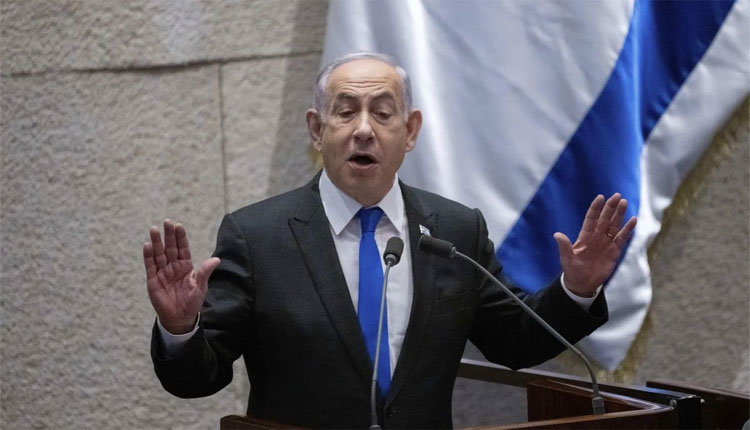
Washington DC: Relations between United States President Donald Trump and Israeli Prime Minister Benjamin Netanyahu appear to have entered a challenging phase, with reports suggesting growing differences over key strategic and diplomatic issues in the Middle East.

For years, Trump and Netanyahu were widely regarded as close political allies. During Trump’s first term in office, the United States took several decisions that strongly aligned with Israel’s interests, including recognising Jerusalem as Israel’s capital and facilitating the Abraham Accords between Israel and several Arab nations. However, recent developments indicate that the relationship may no longer be as smooth as it once was.
According to reports, one of the main reasons behind the apparent strain is the differing approach towards regional diplomacy and security issues. Trump is believed to be focused on advancing broader geopolitical objectives in the Middle East, including efforts aimed at reducing tensions and expanding diplomatic engagement with key regional players. Netanyahu, on the other hand, continues to prioritise Israel’s security concerns and has maintained a firm stance on issues involving Iran and regional conflicts.
The divergence has reportedly become more visible amid discussions surrounding ongoing tensions in West Asia. Political observers suggest that both leaders are approaching the situation from different strategic perspectives, leading to disagreements on the pace and direction of diplomatic initiatives.
Another factor contributing to the friction is the changing political landscape in both countries. Trump is seeking to strengthen his international agenda while balancing domestic political priorities in the United States. Netanyahu, meanwhile, remains under pressure from various political and security challenges within Israel, making policy decisions increasingly sensitive.
Experts note that while differences between allied leaders are not uncommon, the current situation highlights the complexities of managing bilateral ties during a period of regional uncertainty. Despite the reported tensions, the United States and Israel continue to maintain strong institutional and strategic relations across defence, intelligence, and economic sectors.
Analysts believe that neither side is likely to allow personal or political disagreements to significantly undermine the broader partnership between the two countries. The longstanding alliance remains a cornerstone of American policy in the Middle East and a key pillar of Israel’s security framework.
As diplomatic developments continue to unfold, global attention remains focused on how Washington and Tel Aviv navigate their differences while addressing evolving challenges across the region. The coming months could prove crucial in determining whether the reported strain is temporary or indicative of a deeper shift in one of the world’s most significant strategic relationships.
Comments are closed.